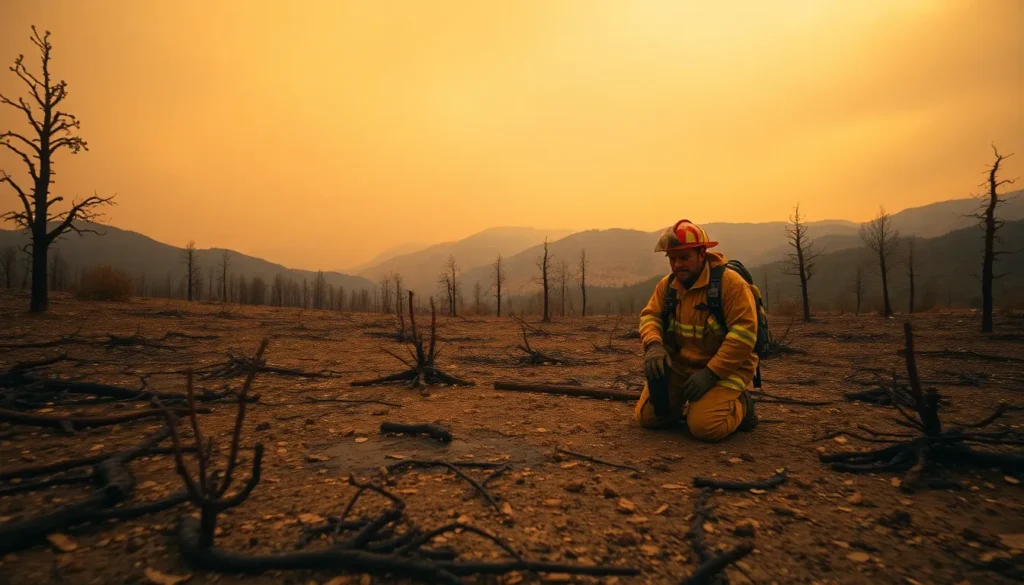
California’s wildfires have become the stuff of legend, but who really lit the match? It’s a question that sparks curiosity and a bit of controversy. From campfire mishaps to downed power lines, the culprits behind these fiery infernos are as varied as the state’s breathtaking landscapes.
Overview of the California Fire
California experiences wildfires annually, driven by various natural and human-induced factors. Drought conditions heighten vulnerability, with dry vegetation acting as fuel for rapidly spreading flames. Lightning strikes often ignite fires in remote areas, complicating firefighting efforts.
Campfire accidents rank among the most common causes of these blazes, leading to the destruction of vast landscapes. Additionally, downed power lines frequently contribute to wildfires, as electrical sparks can ignite surrounding brush.
The state’s increasing development in fire-prone regions raises the risk of human-caused fires. Urban encroachment leads to more structures in high-risk zones, intensifying the potential for catastrophic events.
Climate change plays an undeniable role in exacerbating wildfires, with rising temperatures and changing precipitation patterns creating conditions conducive to ignition and spread. Factors such as these create a complex web of causes, making it challenging to pinpoint a single origin for any specific fire.
Historical records indicate that the frequency of wildfires has surged in recent years, emphasizing the urgency for effective prevention and management strategies. Understanding these contributors lays the groundwork for addressing the ongoing fire crisis in California.
Historical Context
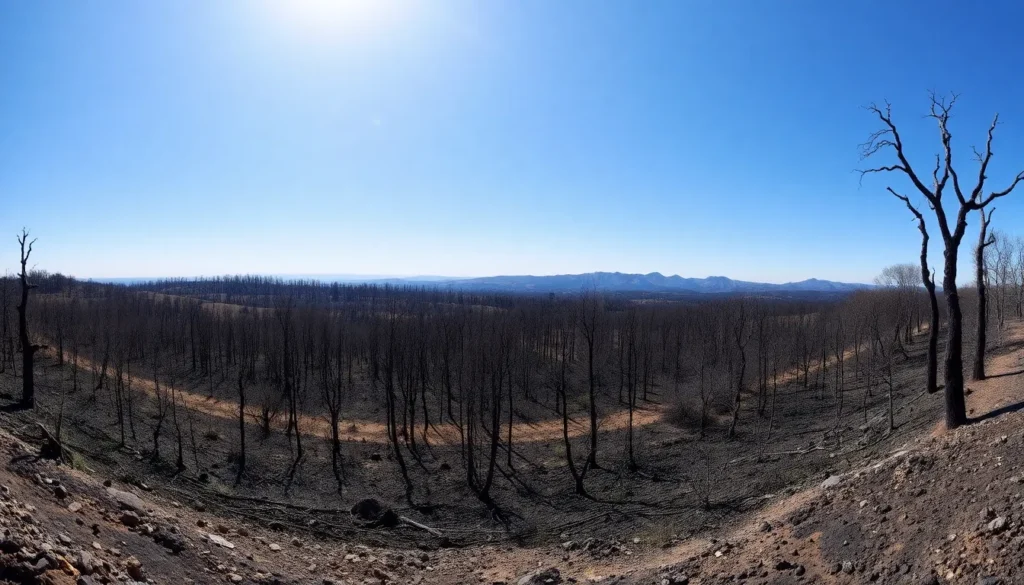
California’s wildfire history reveals a persistent challenge that has only intensified over the years. Wildfires have repeatedly shaped the landscape and communities, necessitating action to protect lives and property.
Previous Fires in California
Historic fires like the 2018 Camp Fire demonstrate the devastating impact of wildfires. Burned areas included the town of Paradise, resulting in 85 fatalities. In 2020, the August Complex Fire emerged as California’s largest recorded wildfire, engulfing over 1 million acres. Extensive damage led to evacuations and significant property loss. Fires throughout earlier decades, such as the 1932 Matilija Fire and the 2003 Cedar Fire, set the stage for understanding current wildfire dynamics. Each event highlights the crucial need for proactive measures in fire management and prevention.
Factors Contributing to Wildfires
Multiple factors contribute to the frequency and intensity of California wildfires. Drought conditions create a dry environment, turning vegetation into kindling. Urban sprawl increases the risk of human-induced ignitions, particularly near wildland-urban interfaces. Lightning strikes frequently ignite fires in remote areas, complicating suppression efforts. Climate change exacerbates these conditions, leading to hotter temperatures and altered precipitation patterns. According to the California Department of Forestry and Fire Protection, human activity accounts for about 85 percent of all wildfire incidents. In summary, understanding these factors is vital to developing effective approaches to mitigate wildfire risks.
Key Events in the California Fire
California’s wildfire history is marked by significant events that reveal patterns of ignition and response. Understanding these events provides context for current wildfire challenges.
Timeline of Major Fires
Notable fires include the 2018 Camp Fire, which claimed 85 lives. The 2020 August Complex Fire stands out as California’s largest wildfire, impacting over 1 million acres. Earlier, the 2003 Cedar Fire burned 273,000 acres, resulting in 15 fatalities. A dramatic increase in wildfire incidents began around 2000, driven by factors like climate change and urbanization. Fires continue to threaten lives and property, highlighting ongoing vulnerabilities.
Impact on Communities
Communities face severe consequences from wildfires. Many lost homes and businesses, while others faced evacuation and displacement. Air quality worsened during fire seasons, impacting health across regions. Economic losses reached billions, affecting local economies and infrastructure. Major fires disrupt daily life, leading to long-lasting psychological effects. The rising frequency of these events compels communities to adapt and rethink their resilience strategies.
Investigating the Causes
Understanding the causes of California’s wildfires involves examining both human activities and natural events. Each factor plays a significant role in shaping the landscape of fire incidents.
Human Factors
Human actions significantly contribute to wildfire occurrences. Campfires left unattended spark numerous blazes each year. Equipment use, including power tools, has led to accidental ignitions. Downed power lines remain a prevalent source of fire initiation, especially during windy conditions. Urban development increases risks, as more structures encroach upon fire-prone areas. Activities such as debris burning or firework use heighten the likelihood of uncontrolled wildfires. Approximately 85 percent of all wildfire incidents stem from human activity, underscoring the need for increased awareness and preventative measures.
Natural Factors
Natural elements also cause wildfires in California. Lightning strikes ignite fires across remote wilderness, often difficult to access for firefighting efforts. Drought conditions exacerbate flammability, leaving vegetation parched and ready to burn. Sudden weather changes, particularly strong winds, can rapidly spread existing fires. Climate change influences these natural occurrences, leading to more intense heatwaves and altered precipitation patterns. All these factors combine to create an environment where wildfires can thrive, demonstrating the urgent need for comprehensive fire management strategies.
Who Started the California Fire?
Wildfires in California often spark debates regarding their origins. Both human actions and natural occurrences significantly contribute to these fires.
Suspected Individuals and Groups
Campers frequently face scrutiny for unattended campfires. Equipment operators also draw attention, as their tools often cause sparks. Some fireworks enthusiasts contribute further to wildfire risks. In many cases, individuals involved in debris burning inadvertently increase fire dangers. Notable incidents involve the actions of utility companies, where equipment malfunctions, such as downed power lines, have ignited flames. The result, whether intentional or unintentional, showcases the ongoing battle against human-induced fires.
Official Reports and Findings
California’s Department of Forestry and Fire Protection (CAL FIRE) regularly investigates fire origins. Reports reveal that human activity causes approximately 85 percent of wildfires in the state. Official investigations often indicate that negligence, such as unattended campfires, accounts for many incidents. In recent years, forecasts suggest a potential increase in fire activity due to climate change impacting the state’s ecosystem. Thorough analysis of wildfire data helps agencies tailor response strategies. Public awareness campaigns focus on educating the community about responsible practices, aiming to reduce fire risks effectively.
California’s wildfire crisis is a complex interplay of human actions and natural events. With a significant portion of fires ignited by human negligence it’s crucial for communities to recognize their role in prevention. The challenges posed by climate change and urban development further complicate the landscape.
As the frequency of wildfires continues to rise the need for effective management strategies becomes increasingly urgent. Public awareness and education on responsible practices can help mitigate risks. By understanding the myriad factors contributing to these devastating events California can work towards a safer future for its residents and ecosystems.