
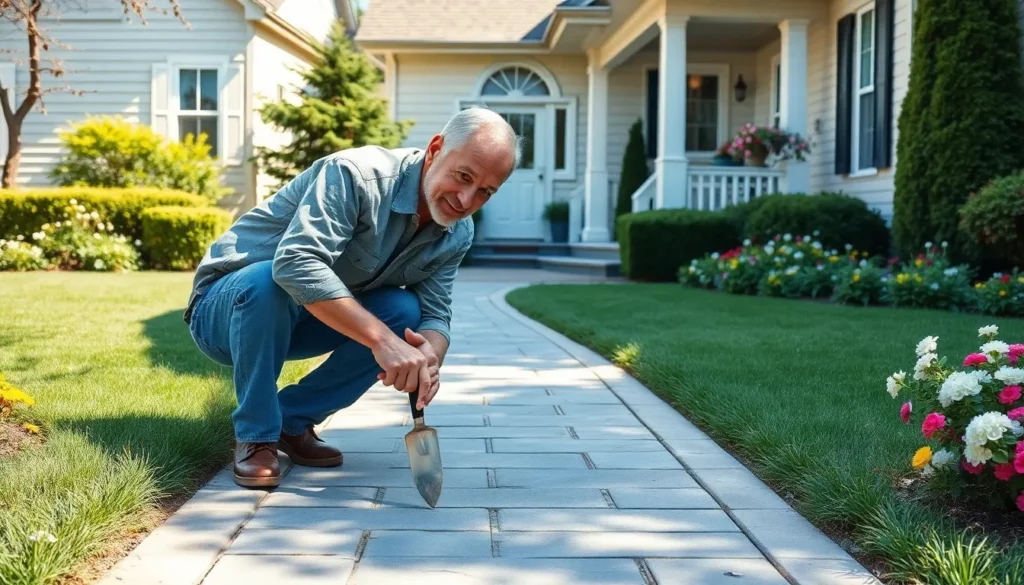
A well-maintained walkway isn’t just a path; it’s the red carpet to your home. Imagine your guests gliding up to your front door, feeling like they’re entering a palace instead of navigating a minefield of cracks and weeds. Walkway maintenance might not sound thrilling, but it’s the unsung hero of curb appeal.
Neglecting those pathways can lead to more than just an eyesore; it can turn into a safety hazard faster than you can say “trip hazard.” Regular upkeep not only enhances your property’s look but also saves you from costly repairs down the road. So why not give your walkways the love they deserve? After all, a little TLC can transform a dull stroll into a grand entrance. Let’s dive into the essentials of walkway maintenance and turn that neglected path into a showstopper.
Importance Of Walkway Maintenance
Walkway maintenance significantly enhances curb appeal and creates a welcoming home entrance. A well-maintained pathway elevates aesthetics, contributing to a positive first impression. Safety remains a top priority; cracks and uneven surfaces might lead to trips and falls.
Regular upkeep prevents costly repairs in the long run. Ignored pathways deteriorate, leading to more extensive damage and higher repair expenses. Clean walkways also deter pests, which often breed in neglected areas.
Routine inspections identify issues early, enabling timely interventions. Addressing minor problems early prevents them from escalating into major concerns. Investing effort in walkway maintenance reflects a homeowner’s pride in their property.
The materials used for walkways, such as concrete, brick, and stone, require specific maintenance methods to ensure longevity. Seasonal changes, like freeze-thaw cycles, affect these materials, making regular maintenance essential.
Lastly, upgraded walkways can increase property value. Buyers often look for well-kept exteriors, seeing them as indicative of a well-cared-for home. Prioritizing walkway maintenance enhances both functionality and aesthetics, ensuring a lasting impression for guests and neighbors alike.
Common Walkway Issues
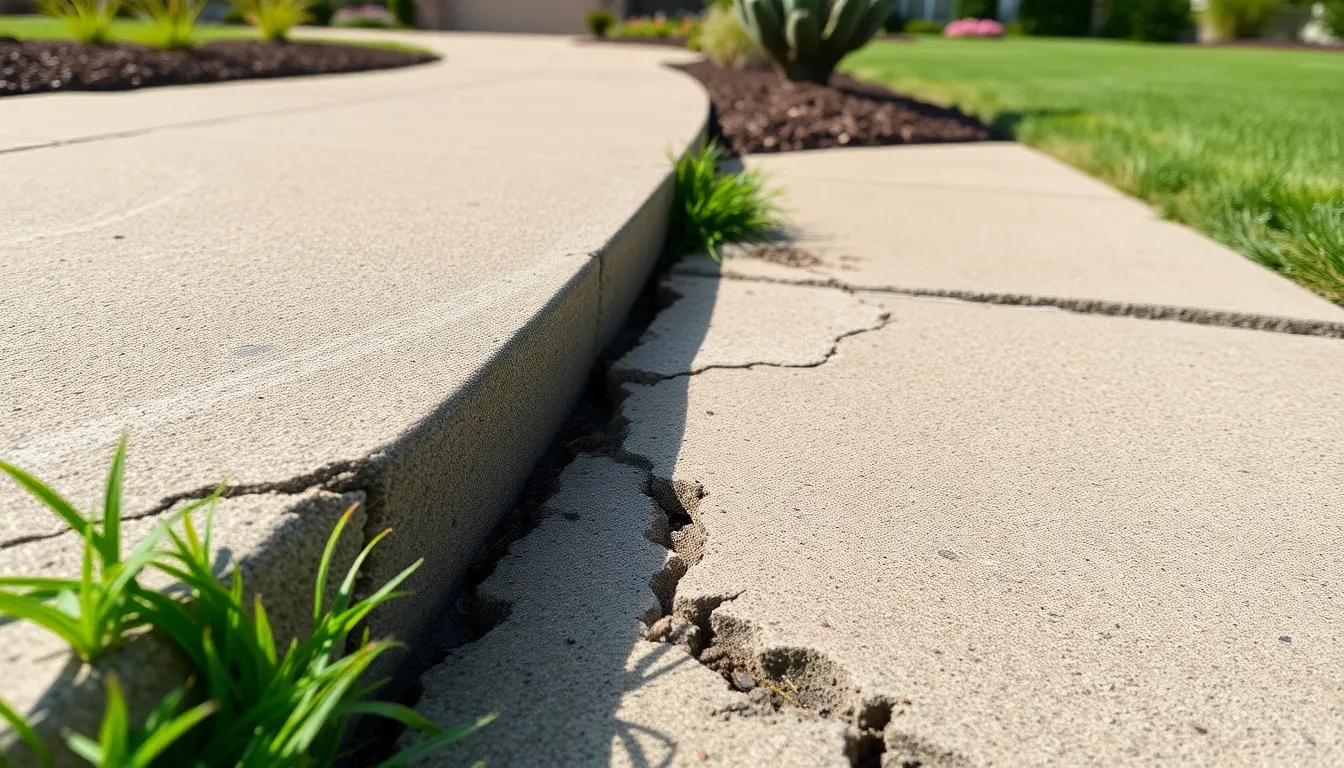
Walkways often face various issues that require attention. Understanding these common problems helps in maintaining safe and beautiful paths.
Cracks And Damage
Cracks frequently develop in walkways due to weather changes and material aging. Concrete surfaces may experience fractures from freeze-thaw cycles, while brick and stone may chip or break under stress. Identifying cracks early is essential, as small issues can expand into larger damage. Repairing them promptly with filler or patching material prevents further deterioration. Regular inspections can catch these damages before they worsen, allowing for timely repairs and prolonged walkway life.
Uneven Surfaces
Uneven surfaces create tripping hazards and diminish aesthetics. Settling soil or tree roots often causes this issue, leading to misaligned stones or lifted pavement sections. Homeowners should assess their walkways regularly for signs of unevenness. Addressing these problems involves leveling the surface or resetting pavers to restore stability. Using proper drainage techniques also helps prevent future unevenness, ensuring a safe and inviting pathway for all visitors.
Maintenance Techniques
Effective walkway maintenance involves various techniques that enhance durability and aesthetics. Homeowners benefit from adopting both cleaning and repair strategies to maintain their walkways.
Cleaning Methods
Regular cleaning keeps pathways safe and visually appealing. Sweeping removes debris and leaves, preventing mold and slippery surfaces. Power washing eliminates stubborn stains and restores the walkway’s original look. For concrete surfaces, using a mixture of water and mild detergent can effectively lift grime. Additionally, sealing the walkway after cleaning protects against future stains and wear.
Repair Strategies
Addressing damage promptly strengthens walkway safety and appearance. Filling cracks with an appropriate filler prevents water infiltration, which causes further deterioration. Adjusting uneven surfaces may require either re-leveling or replacing loose material. For materials like brick or stone, replacing damaged units helps maintain structural integrity. Ensuring that homeowners inspect their walkways regularly promotes long-term durability and reduces repair costs.
Seasonal Walkway Care
Seasonal care is critical for maintaining walkways throughout the year. Different seasons demand specific maintenance strategies to preserve durability and appearance.
Winter Preparations
Winter preparations focus on preventing damage from snow and ice. Homeowners should consider applying a layer of salt or sand before a snow event, which helps improve traction and prevent ice formation. Regularly clearing snow with a shovel reduces the risk of cracking and further degradation. Inspecting walkways for cracks before winter sets in is essential; addressing these issues now can prevent them from worsening due to freeze-thaw cycles.
Summer Checklists
Summer checklists emphasize cleaning and repairing walkways. Power washing serves as an effective method for removing dirt, mildew, and stains, contributing to a fresh appearance. Prioritizing inspections during summer helps identify any uneven surfaces, cracks, or loose materials. Filling these cracks with appropriate fillers ensures longevity. Sealing walkways after cleaning protects surfaces from heat and UV damage while providing a polished look.
Cost Considerations
Walkway maintenance involves various costs that homeowners must evaluate to ensure effective upkeep. Regular inspections can help identify minor issues that lead to more significant expenses if neglected. For instance, early detection of cracks or uneven surfaces costs significantly less to repair than extensive replacement or major fixes.
Different materials, like concrete and brick, incur specific maintenance expenses. Concrete typically requires resealing every 3 to 5 years, averaging between $0.50 and $1.00 per square foot. Brick walkways might need repointing every 15 to 20 years, costing between $5 and $15 per square foot, depending on labor and material quality.
Seasonal upkeep also contributes to costs. In winter, applying salt can prevent ice formation and costs around $20 for a 50-pound bag. Meanwhile, investing in a snow blower, averaging $200 to $800, can make snow removal efficient and reduce damage to walkways. Regular cleaning tools, like power washers, may require an initial investment of $100 to $300, but they enhance aesthetics and longevity.
Lastly, sealing walkways after cleaning fosters protection against weather-related wear. The average cost of sealing is about $0.50 to $1.50 per square foot, depending on the product and area size. Weighing these costs allows homeowners to budget effectively for maintaining their walkways while avoiding long-term repair expenses. Prioritizing walkway maintenance ultimately safeguards property value and improves overall curb appeal.
Prioritizing walkway maintenance is essential for any homeowner looking to enhance their property’s curb appeal and safety. Regular inspections and timely repairs can prevent minor issues from escalating into costly problems while ensuring a welcoming entrance. By adopting effective cleaning and maintenance strategies tailored to specific materials, homeowners can protect their walkways from seasonal wear and tear.
Investing time and resources in walkway upkeep not only elevates the aesthetics of a home but also contributes to its overall value. A well-maintained pathway reflects care and attention to detail, making a lasting impression on guests and potential buyers alike. Embracing these practices ensures that walkways remain functional and beautiful for years to come.


