Table of Contents
ToggleSteam heat systems have kept homes warm for over a century, but they don’t run on autopilot. Unlike forced-air systems, steam furnaces rely on water, pressure, and simple mechanical controls that need regular attention. Skip maintenance, and homeowners risk uneven heating, rising fuel bills, or worse, a cracked boiler that floods the basement. The good news? Most steam furnace upkeep doesn’t require a license or expensive tools. With monthly checks and a handful of seasonal tasks, anyone can keep their system running smoothly and safely through the coldest months.
Key Takeaways
- Steam furnace maintenance prevents safety hazards like faulty low-water cutoffs and pressure-relief valve failures that can lead to boiler damage or dangerous overpressurization.
- Monthly checks including water-level inspection, radiator-vent testing, and pressure-gauge monitoring take under 15 minutes and catch small issues before they become costly repairs.
- Seasonal maintenance tasks like cleaning the sight glass, flushing the low-water cutoff, and inspecting pipes help maintain efficiency and extend boiler lifespan to 50+ years for cast-iron models.
- Common steam furnace problems such as uneven radiator heating, water hammer, and short-cycling can often be solved by adjusting vents, checking pipe pitch, and tuning the pressuretrol settings.
- Licensed professionals should handle combustion analysis, gas-piping work, pressure-relief valve replacement, and boiler leak diagnosis to ensure safety and maintain warranty compliance.
Why Regular Steam Furnace Maintenance Matters
Steam furnaces convert water to steam in a cast-iron or steel boiler, then push that steam through pipes and radiators by pressure alone, no fans, no ducts. Because the system depends on precise water levels, functioning safety controls, and clear pathways for steam and condensate, neglect shows up fast.
Safety sits at the top of the list. A faulty low-water cutoff can let the boiler fire with insufficient water, leading to overheating and potential cracks in the heat exchanger. Pressure-relief valves that stick closed can turn a boiler into a bomb, rare, but not unheard of in poorly maintained systems.
Efficiency takes a hit when sediment builds up at the bottom of the boiler. That layer of sludge insulates the water from the burner flame, forcing the system to run longer and burn more fuel for the same heat output. A dirty sight glass or clogged Hartford loop can also throw off water levels, causing short-cycling and uneven radiator temperatures.
Longevity improves when parts get regular attention. Cast-iron boilers can last 50 years or more if water quality stays good and corrosion stays minimal. Steel boilers have shorter lifespans but still benefit from clean water and annual inspections. Replacing a $15 valve seat today beats replacing a $10,000 boiler in five years.
Essential Monthly Steam Furnace Checks
Monthly walk-throughs catch small issues before they snowball. These checks take less than 15 minutes and require no special tools.
Check the water level in the sight glass. The water line should sit about halfway up the glass when the boiler is cold. If it’s too low, add water slowly using the manual feed valve until the level reaches the midpoint. Never add cold water to a hot boiler, thermal shock can crack cast iron.
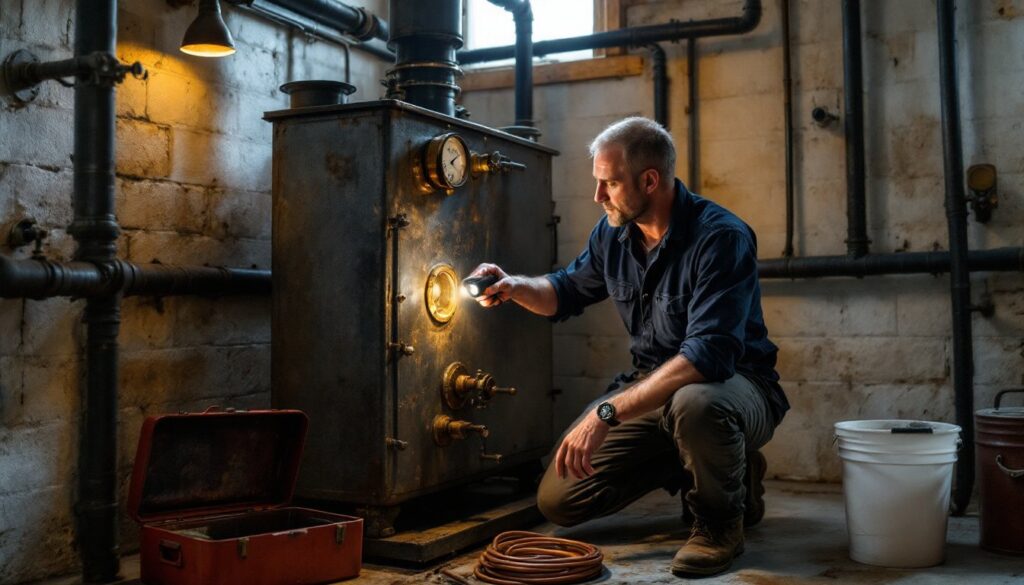
Test the low-water cutoff. With the boiler off, open the blow-down valve at the bottom of the cutoff device (usually a float-style control mounted on the side of the boiler). Let it drain into a bucket until water runs clear, this flushes out sediment that can jam the float. Close the valve, then turn the boiler back on. The burner should fire normally.
Inspect radiator vents. Walk through the house and listen for hissing. Each radiator should have a vent valve that releases air as steam enters, then closes automatically. If a vent sprays water or doesn’t hiss at all, it’s clogged or failed and needs replacement.
Check the pressure gauge. Steam systems for residential use rarely need more than 2 psi of pressure. If the gauge climbs above that, the pressuretrol (the pressure control switch) may need adjustment or the venting system may be undersized.
Look for leaks around valves and fittings. A small drip can waste gallons over a heating season and promote corrosion. Tighten packing nuts gently, over-tightening can damage valve stems.
Seasonal Maintenance Tasks for Optimal Performance
Before each heating season, dedicate a Saturday morning to deeper maintenance. These tasks go beyond monthly checks and help the system survive a winter of hard use.
Inspecting the Water Level and Sight Glass
The sight glass is the vertical tube on the front or side of the boiler that shows the water line. Over time, mineral deposits and rust can cloud the glass or clog the connections, making it impossible to read.
First, shut off the boiler and let it cool for at least an hour. Close the two shut-off valves (also called gauge cocks) at the top and bottom of the sight glass, these isolate the glass from the boiler. Crack open the drain valve at the bottom of the glass assembly and let any remaining water drain into a bucket.
Remove the nuts holding the glass in place, then slide out the old glass tube. Inspect the rubber or fiber gaskets at each end, if they’re brittle or compressed, replace them. Clean the threaded connections with a wire brush to remove scale.
Install the new glass (available at plumbing-supply houses for around $10–$20) with fresh gaskets. Tighten the nuts hand-tight, then give them a quarter-turn with a wrench, over-tightening cracks the glass. Open the shut-off valves slowly and watch for leaks.
Refill the boiler to the proper level if needed, then fire it up and confirm the water line is visible and steady.
Cleaning and Flushing the Low-Water Cutoff
The low-water cutoff (LWCO) is a safety device that shuts down the burner if the water level drops too low. Most residential steam boilers use a float-style cutoff: a chamber with a float inside that rises and falls with the water level, opening or closing electrical contacts.
Sediment settles in that chamber, jamming the float or clogging the connection to the boiler. Flushing it monthly helps, but an annual teardown ensures reliability.
Shut off power to the boiler at the circuit breaker, steam boiler controls run on 120V, and you don’t want a surprise spark. Close the valve between the LWCO chamber and the boiler (if one exists), then open the blow-down valve and drain the chamber completely.
Some LWCO models let you unscrew the chamber for inspection. If yours does, remove it and rinse it under a hose or in a bucket of water. Use a small brush to scrub away rust and scale. Check the float for freedom of movement, it should bob up and down without resistance.
Reassemble, open the isolation valve, and refill. Restore power and test the cutoff by slowly draining water from the sight glass while the burner is on. When the water drops below the safe level, the burner should shut off immediately. If it doesn’t, the LWCO is faulty and must be replaced, this isn’t optional.
Homeowners who need a comprehensive approach to system upkeep often turn to a gas system maintenance checklist to track all critical tasks, including burner inspections and pilot assembly cleaning.
Common Steam Furnace Problems and How to Fix Them
Radiators won’t heat evenly. One radiator scalding hot, another ice-cold? The vents are likely mismatched. Fast-venting radiators (closest to the boiler) should get slow vents (smaller orifice), while distant radiators need fast vents. Adjustable vents (like the Gorton or Ventrite models) let homeowners dial in the rate. Replace vents one at a time and monitor performance, every system is different.
Water hammer. That loud banging in the pipes happens when condensate (water formed from cooled steam) gets trapped in a horizontal pipe with improper pitch. Steam rushing past the puddle picks up droplets and slams them into fittings. Check that all horizontal steam mains slope back toward the boiler at least 1 inch per 20 feet. Sagging pipes may need new hangers. In severe cases, rerouting a section of pipe is the only fix, this is a job for a steam-heating specialist.
Boiler short-cycles. If the burner fires for two minutes, shuts off, then fires again, the system is oversized, the venting is inadequate, or the pressuretrol is set too low. First, verify the cut-in and cut-out settings on the pressuretrol (typical residential settings are 0.5 psi cut-in, 1.5 psi cut-out). If the settings are correct, the system may need larger main vents or a smaller boiler nozzle (gas) or reduction in firing rate (oil). Professional combustion analysis helps here, according to industry experts at Angi, tuning a boiler for peak efficiency often requires calibrated instruments and experience.
Rusty or discolored water in the sight glass. A little rust is normal in older systems, but thick, muddy water indicates corrosion inside the boiler. Drain and flush the boiler (with the system cool) by opening the drain valve at the bottom and letting water run until it’s clear. If the water stays brown after multiple flushes, internal corrosion may be advanced, consult a licensed boiler technician for a pressure test and inspection.
Pilot light won’t stay lit (gas boilers). A dirty thermocouple or faulty gas valve is the usual culprit. Remove the thermocouple (a thin rod that sits in the pilot flame) and clean the tip with fine sandpaper. Reinstall and test. If the pilot still won’t hold, the thermocouple or gas valve needs replacement, both are straightforward fixes for a qualified HVAC tech.
When to Call a Professional for Steam Furnace Service
DIY maintenance covers most routine tasks, but some jobs demand a licensed professional. Annual combustion analysis tops the list, techs use meters to measure flue-gas temperature, CO₂, and oxygen levels, then adjust burner settings for maximum efficiency and safety. Skipping this test can lead to incomplete combustion, sooting, and carbon monoxide buildup.
Anything involving gas piping, burner replacement, or electrical controls generally requires a license in most jurisdictions. The same goes for replacing the pressure-relief valve, this spring-loaded safety device must be rated for the boiler’s maximum allowable working pressure (MAWP), and improper installation can make it useless.
If the boiler is leaking from the jacket or heat exchanger, it’s often beyond economical repair. Cast-iron sections can sometimes be replaced, but steel boilers with cracks usually need full replacement. Many homeowners research options and pricing through platforms like HomeAdvisor, which connect them with local contractors and provide cost estimates based on project scope.
Wet returns (pipes that carry condensate below the water line) that leak or corrode also require professional attention, improper repairs can introduce air into the system and cause chronic problems. And if the boiler repeatedly trips the low-water cutoff even though a full sight glass, a hidden leak or faulty piping may be the cause. Diagnosing these issues often involves shutting down the system, pressurizing it with air, and listening for escapes, a job best left to someone with the right tools and insurance.
For complex DIY projects and system overhauls, Bob Vila offers in-depth guides and expert insights that help homeowners decide when to tackle a repair and when to pick up the phone.
Permits aren’t usually required for routine maintenance, but any work that alters venting, gas piping, or boiler capacity often needs approval from the local building department. Check with the authority having jurisdiction (AHJ) before starting major modifications, fines and insurance headaches aren’t worth the savings.