Table of Contents
ToggleA functioning air conditioner isn’t a luxury, it’s essential when summer heat peaks. Yet most homeowners wait until their AC quits before giving it attention. By then, a simple fix becomes an expensive emergency. Preventive maintenance keeps your system running efficiently, extends its lifespan by years, and cuts energy bills by up to 15%. Whether you’re handy with basic tools or prefer to hire out, understanding what your AC needs, and when, helps you avoid midnight service calls and three-figure repair bills.
Key Takeaways
- AC preventive maintenance extends your system’s lifespan from 10 years to 15-20 years and cuts energy bills by up to 15%, making it one of the highest-return investments for homeowners.
- Replacing air filters every 30-90 days and cleaning the outdoor condenser unit are simple DIY tasks that prevent the most common causes of AC inefficiency and costly breakdowns.
- Low refrigerant, electrical work on capacitors, and leak repairs require EPA-certified technicians—attempting these without proper training risks injury, equipment damage, and voids warranties.
- A seasonal AC maintenance checklist covering spring tune-ups, monthly monitoring, and annual professional service catches small issues like worn capacitors ($20 fix) before they cascade into compressor failure ($1,200-$2,500 repair).
- Many HVAC manufacturers require documented annual maintenance to honor warranties; skip it and covered repairs become out-of-pocket expenses—keep receipts and maintenance logs as proof of care.
Why AC Preventive Maintenance Matters for Homeowners
Air conditioning systems are built to last 15-20 years, but only with proper care. Neglect drops that lifespan to 10 years or less. The refrigerant coils, compressor, and blower motor all depend on clean airflow and balanced pressure. When dust clogs the evaporator coil or refrigerant levels drop, the compressor works harder, runs hotter, and fails sooner.
Energy costs climb right alongside wear and tear. A dirty filter alone can increase energy consumption by 5-15%. Add a grimy condenser coil and low refrigerant, and you’re looking at a 25% spike in your electric bill. For a system pulling 3,500 watts, that’s real money every billing cycle.
Regular maintenance also catches small issues before they cascade. A worn capacitor is a $20 part and a 20-minute fix. Ignore it, and the compressor burns out, now you’re facing a $1,200-$2,500 repair or full system replacement. According to comprehensive maintenance guides, seasonal tune-ups address these vulnerabilities before they escalate.
Most HVAC manufacturers require documented annual maintenance to honor warranties. Skip it, and a covered repair becomes an out-of-pocket expense. Keep receipts, log filter changes, and schedule professional service at least once a year.
Essential AC Maintenance Tasks You Can Do Yourself
Homeowners can handle a surprising amount of AC upkeep with basic tools and an hour or two each season. These tasks don’t require refrigerant certification or electrical licenses, and they address the most common causes of inefficiency and breakdowns.
Filter Replacement and Cleaning
Disposable filters should be replaced every 30-90 days depending on household conditions. Homes with pets, smokers, or high dust levels need monthly changes. Standard 1-inch fiberglass filters (MERV 1-4) are cheap but ineffective at trapping fine particles. Pleated filters (MERV 8-11) cost more but capture pollen, mold spores, and pet dander without restricting airflow.
Check the filter size printed on the cardboard frame, common dimensions include 16x20x1, 20x25x1, and 16x25x1 (actual size is typically ½ inch smaller than nominal). Turn off the system at the thermostat before removing the old filter. Slide the new one in with the airflow arrow pointing toward the blower motor.
Washable electrostatic filters last 5-10 years but require monthly cleaning. Rinse them with a garden hose from the clean side, spray with a 50/50 white vinegar solution to kill mold, rinse again, and let them dry completely before reinstalling. Never run the system with a wet filter, moisture promotes mold growth in the ductwork.
Locate your filter at the return air grille (often in a hallway ceiling or wall) or inside the air handler cabinet. Some systems have multiple returns: check them all.
Outdoor Unit Care and Debris Removal
The condenser unit outside your home is a magnet for leaves, grass clippings, cottonwood seeds, and dirt. When debris clogs the aluminum fins, airflow drops and the compressor overheats.
Safety first: Shut off power to the unit at the outdoor disconnect box (a gray metal box mounted near the condenser). Flip the switch or pull the fuse block. Verify power is off with a non-contact voltage tester if you’re working near electrical components.
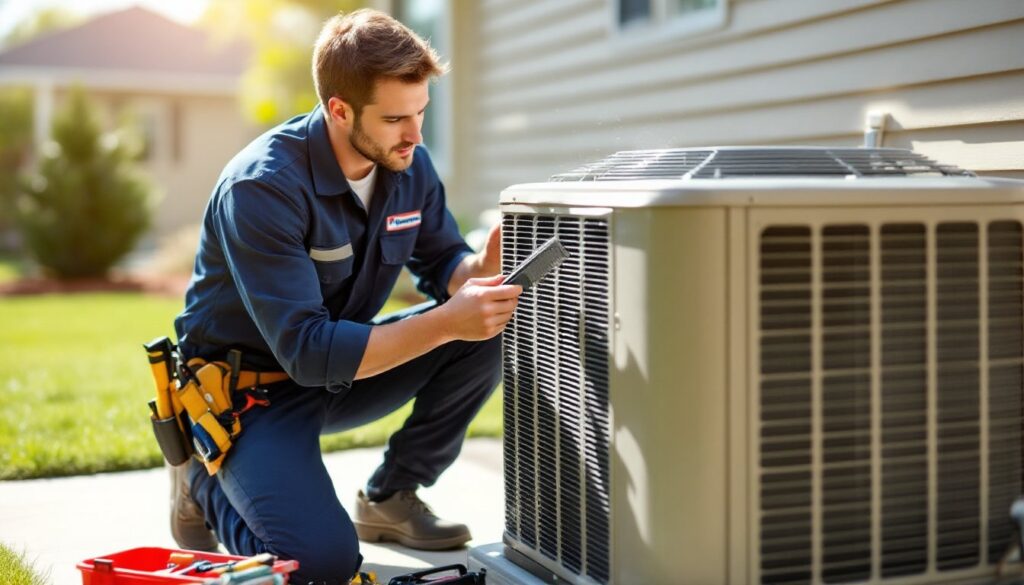
Clear a 2-foot perimeter around the unit. Trim back shrubs, pull weeds, and remove any lawn furniture or grills. Use a shop vac or soft brush to remove surface debris from the fins. For caked-on dirt, spray the fins gently with a garden hose from the inside out (top to bottom). Avoid pressure washers, they bend the delicate fins and reduce airflow.
Bent fins can be straightened with a fin comb (about $8 at hardware stores). Match the comb teeth to the fin spacing (usually 10-14 fins per inch). Gently rake vertically to realign bent sections.
Remove the top grille (usually 4-6 screws or clips) and lift out any leaves or debris inside the unit. Wipe down the fan blades with a damp cloth. Don’t force the fan to spin manually, it can damage the capacitor or motor bearings.
Inspect the concrete pad beneath the unit. If it’s settled and the unit tilts more than a few degrees, shim it level with composite shims or plastic wedges. An unlevel condenser strains the compressor and can cause refrigerant flow issues.
When to Call a Professional for AC Maintenance
Some AC tasks require EPA Section 608 certification, specialized gauges, or electrical expertise. Attempting them without training risks injury, equipment damage, and legal liability.
Refrigerant work is federally regulated. Only certified techs can check levels, repair leaks, or recharge the system. If your AC runs constantly but doesn’t cool, or ice forms on the refrigerant lines, call a pro. Low refrigerant always indicates a leak, simply adding more without fixing the source wastes money and harms the environment.
Electrical components like capacitors, contactors, and transformers carry high voltage even when the thermostat is off. A dual-run capacitor stores 370-440 volts and can deliver a lethal shock hours after shutdown. Unless you’re experienced with HVAC electrical systems and have proper discharge tools, leave this to licensed technicians.
Annual tune-ups should include tasks homeowners can’t safely perform: checking refrigerant pressures with manifold gauges, measuring amperage draw on the compressor and blower motor, testing the condensate drain with a wet/dry vac, lubricating motor bearings (on older units), inspecting ductwork for leaks, and calibrating the thermostat.
Expect to pay $75-$150 for a standard maintenance visit. Many HVAC companies offer seasonal contracts or club memberships ($150-$300/year) that include spring and fall tune-ups plus priority scheduling and discounts on repairs.
Permit-required work includes anything that modifies the ductwork, replaces the air handler or condenser, or alters electrical service to the unit. Even if you’re comfortable doing the work, most jurisdictions require a licensed contractor to pull permits and arrange inspections. Unpermitted work can void your homeowner’s insurance and complicate future home sales.
Resources like home maintenance guides and DIY project tutorials can help you understand what’s involved in various HVAC tasks, but they’re not substitutes for hands-on experience with high-voltage systems and refrigerants.
Creating Your Seasonal AC Maintenance Checklist
A simple checklist keeps maintenance on track and prevents forgotten tasks. Print it, stick it inside the air handler door, and check items off as you complete them.
Spring (before cooling season):
- Replace or clean air filter
- Clear 2-foot perimeter around outdoor unit
- Remove winter cover (if used) from condenser
- Vacuum debris from condenser fins and interior
- Straighten bent fins with fin comb
- Check condensate drain line for clogs (pour ½ cup bleach solution down the drain)
- Verify thermostat switches to cooling mode and reaches set temperature
- Schedule professional tune-up
Monthly (during cooling season):
- Check and replace filter as needed
- Listen for unusual noises (grinding, squealing, buzzing)
- Monitor cooling performance and airflow at registers
Fall (end of cooling season):
- Replace or clean air filter
- Clear leaves and debris from outdoor unit
- Cover outdoor unit if located under trees (use a breathable cover, not plastic tarps that trap moisture)
- Shut off dedicated AC circuit breaker if you have a heat-only furnace
Annual (professional service):
- Refrigerant pressure and level check
- Electrical component testing (capacitor, contactor, relays)
- Amp draw measurement on compressor and blower
- Ductwork inspection for leaks
- Thermostat calibration
- Condensate drain cleaning and treatment
Document service dates, filter changes, and any repairs. A maintenance log helps spot patterns (like filters clogging faster than expected, which could indicate duct leaks or undersized returns) and provides warranty documentation.
Conclusion
AC preventive maintenance isn’t glamorous, but it’s one of the highest-return tasks a homeowner can tackle. An hour in spring and a few minutes each month keep your system running efficiently through the hottest weeks of summer. Pair your DIY efforts with annual professional service, and you’ll get every year of that 15-20 year lifespan, plus lower bills and fewer emergency repairs.