Table of Contents
ToggleWhen summer temperatures in Tucson regularly soar above 110°F, air conditioning isn’t a luxury, it’s a survival tool. A well-maintained AC system can be the difference between comfortable living and a miserable (or dangerous) breakdown in peak heat. Desert conditions place unique demands on cooling equipment: relentless sun, blowing dust, and months of non-stop operation. This guide walks Tucson homeowners through the essential maintenance tasks that keep systems running efficiently, the warning signs that require professional attention, and practical strategies for preventing the most common desert climate failures.
Key Takeaways
- Regular AC maintenance in Tucson can extend your system’s lifespan from 8-10 years to 12-15 years and prevent costly repairs or replacement costs between $4,000-$8,000.
- Replace air filters every 30-60 days in Tucson’s dusty desert environment, and inspect outdoor condenser coils monthly during cooling season for dust and debris buildup.
- A clogged AC condenser coil can reduce cooling capacity by 25% and spike energy bills by 15-30%, making regular professional cleaning during spring tune-ups essential.
- Schedule professional AC maintenance in early spring (March or April) before summer heat peaks, and expect to pay $75-$150 for a standard maintenance visit in Tucson.
- Watch for warning signs like weak airflow, warm air from vents, unusual noises, or ice on refrigerant lines, which require immediate professional attention to prevent compressor damage.
Why Regular AC Maintenance Is Critical in Tucson’s Extreme Climate
Tucson’s climate isn’t just hot, it’s punishing to HVAC equipment in ways that milder regions never experience. Systems here run for six to eight months straight, often cycling on and off dozens of times daily as they fight triple-digit outdoor temperatures. That kind of sustained workload accelerates wear on compressors, fans, and electrical components.
The desert environment adds another layer of complexity. Blowing dust and fine particulates infiltrate outdoor condenser units, coating coils and reducing heat transfer efficiency. A unit that’s even 20% clogged can lose a quarter of its cooling capacity and spike energy bills by 15-30%. Monsoon season brings additional challenges: sudden humidity spikes, dust storms that cake equipment in grit, and occasional flooding that can damage electrical connections.
Regular maintenance directly addresses these stressors. Clean coils transfer heat efficiently. Fresh filters maintain proper airflow and protect the blower motor. Tight electrical connections prevent arcing and component failure. Checking refrigerant levels ensures the system isn’t working harder than necessary to achieve target temperatures.
Neglecting maintenance doesn’t just risk comfort, it accelerates the timeline to expensive repairs or full system replacement. A typical central AC unit in Tucson might last 12-15 years with consistent care. Skip annual service, and that lifespan can drop to 8-10 years. When replacement costs run $4,000-$8,000 for a standard residential system (depending on tonnage and efficiency rating), maintenance is cheap insurance.
Essential AC Maintenance Tasks Every Tucson Homeowner Should Know
DIY Air Filter Replacement and Cleaning
Air filter maintenance is the single most impactful task homeowners can handle themselves. In Tucson’s dusty environment, standard 1-inch pleated filters should be checked monthly during cooling season and replaced every 30-60 days, more frequently if you have pets or if dust storms have been active.
Locate the filter at the return air grille (often in a hallway ceiling or wall) or in a slot at the air handler itself. Always check the airflow direction arrow on the filter frame and install it correctly. Backward installation restricts airflow and forces the blower motor to work harder.
For homes with reusable electrostatic or washable filters, rinse them with a garden hose (spray from the clean side toward the dirty side) and let them dry completely before reinstalling. Never run the system without a filter, even for a few hours. Dust that bypasses the filter coats the evaporator coil and blower wheel, reducing efficiency and potentially causing freeze-ups.
Wear a dust mask when handling dirty filters, especially during allergy season. Tucson’s air carries pollen, mold spores, and valley fever fungal spores that accumulate in filters.
Outdoor Unit Care in Desert Conditions
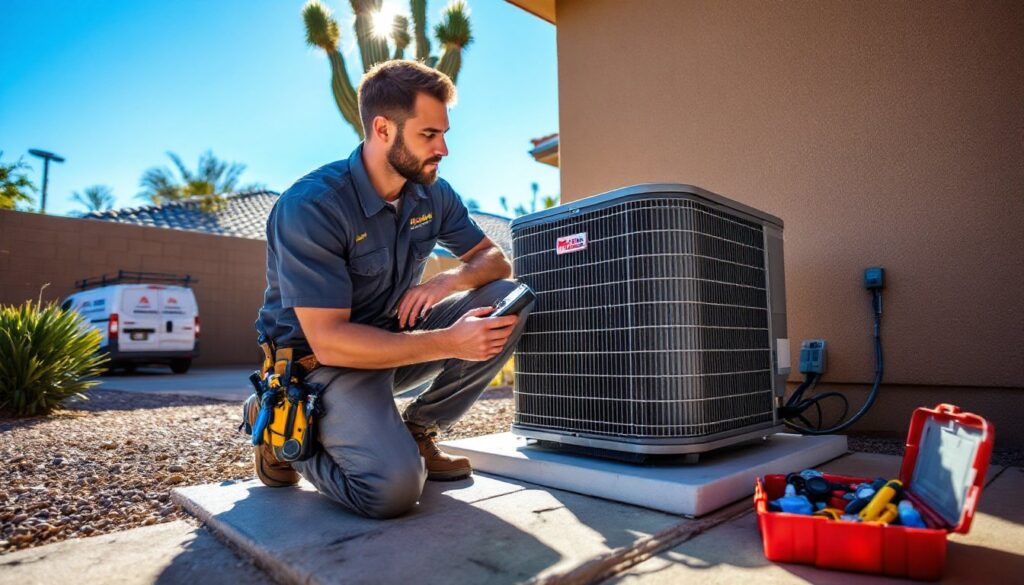
The outdoor condenser unit takes the brunt of desert abuse. Start by cutting power to the unit at the disconnect box (usually mounted on the wall near the condenser). Clear debris within a 2-foot radius: palm fronds, tumbleweeds, landscape fabric, and palo verde seed pods all restrict airflow.
Inspect the aluminum fins on the condenser coil. These thin metal plates bend easily and, when flattened, block airflow. A fin comb (available at hardware stores for under $10) can straighten minor damage. Work gently, the fins tear if forced.
Once or twice during cooling season, spray the coil from the inside out using a garden hose with a spray nozzle set to a gentle fan pattern. Never use a pressure washer, the force will damage fins and drive dirt deeper into the coil. Professional coil cleaning (using foaming coil cleaner and proper technique) should happen during annual service, but homeowners can handle light dust removal between visits.
Check that the concrete pad beneath the unit is level. Desert soil shifts, and a tilted unit can strain refrigerant lines and cause vibration. If the pad has settled more than an inch, consider having it releveled or shimmed by a professional.
During monsoon season, inspect the area around the condenser after storms. Standing water near the unit can corrode electrical connections and damage the fan motor. Ensure proper drainage or regrade the soil if water pools regularly.
When to Schedule Professional AC Maintenance in Tucson
While homeowners can handle filters and basic cleaning, comprehensive maintenance requires professional tools and expertise. Schedule service in early spring, ideally March or early April, before the summer heat ramps up. Waiting until May means competing with everyone else whose AC just failed, and technicians get booked solid.
A thorough professional tune-up should include refrigerant level checks (undercharged systems work harder and can damage the compressor), electrical connection tightening, capacitor testing, blower motor lubrication if applicable, thermostat calibration, and condensate drain line flushing. Technicians also measure temperature split (the difference between supply and return air temps) to verify the system is cooling properly.
Expect to pay $75-$150 for a standard maintenance visit in the Tucson area, though prices vary by company and service plan. Many HVAC contractors offer annual maintenance agreements that bundle spring tune-ups with priority service and discounts on repairs, often a smart investment for Tucson’s demanding climate.
Beyond annual service, call a professional immediately if you notice weak airflow (could indicate a failing blower motor or duct leaks), warm air from vents when the system is running, unusual noises (grinding, squealing, or banging all signal component problems), or ice forming on refrigerant lines or the indoor coil. These aren’t DIY fixes, they require diagnostic tools and EPA-certified refrigerant handling.
If your system is older than 10 years and repairs are becoming frequent, have a technician perform a load calculation and efficiency assessment. Sometimes a struggling, inefficient unit costs more to keep limping along than replacing it with a modern high-SEER model, especially given Tucson Electric Power and Southwest Gas rebates for qualifying high-efficiency systems.
Common AC Problems Tucson Homeowners Face and How to Prevent Them
Dust-clogged condenser coils top the list of Tucson AC problems. Desert dust is finer than typical dirt and works into coil gaps that larger debris wouldn’t penetrate. Prevention means regular hose-downs and professional coil cleaning during tune-ups. If you live near undeveloped desert or agricultural areas, increase cleaning frequency.
Refrigerant leaks are another chronic issue. Tucson’s temperature swings (100°F days to 70°F nights) cause expansion and contraction in refrigerant lines. Over time, joints and connections can develop tiny leaks. Low refrigerant doesn’t just reduce cooling, it can cause the evaporator coil to freeze and damage the compressor. Only EPA-certified technicians can legally handle refrigerant. If you suspect a leak (ice on lines, hissing sounds, or warm air from vents), shut down the system and call for service.
Hard-start conditions plague older AC units. When compressors struggle to start on hot afternoons (when electrical demand peaks and voltage can sag), they draw excessive current and trip breakers or damage windings. A hard-start kit, a capacitor that gives the compressor an extra jolt at startup, costs $100-$200 installed and can extend compressor life by years.
Thermostat location issues cause comfort problems in Tucson homes. A thermostat mounted on a west-facing wall or near a heat-generating appliance will read artificially high and short-cycle the system. Professional thermostat relocation typically runs $150-$300 depending on wiring complexity, but it solves chronic comfort complaints and reduces wear.
Duct leaks are invisible energy thieves. Tucson’s attics reach 140-160°F in summer. If supply ducts leak conditioned air into that superheated space, cooling efficiency plummets. According to HVAC industry research, typical duct systems lose 20-30% of conditioned air to leaks. Professional duct sealing (using mastic or Aeroseal technology) pays for itself in energy savings within a few years. Homeowners can tackle accessible duct connections with mastic sealant (never regular duct tape, which degrades in heat), but much of the ductwork in a typical home is buried in insulation or inaccessible.
Preventive steps make the difference. Keep landscaping trimmed back. Replace filters on schedule. Don’t block return vents with furniture. Run ceiling fans to distribute cool air more evenly, reducing the burden on the AC. And when selecting heating and air conditioning professionals, check licensing (ROC license in Arizona), insurance, and reviews specific to Tucson desert climate experience.
Conclusion
AC maintenance in Tucson isn’t optional, it’s essential infrastructure care in a climate that depends on reliable cooling. Homeowners who stay on top of filter changes, keep outdoor units clean, and schedule professional service before peak season will enjoy lower energy bills, fewer emergency repairs, and longer equipment life. The desert is tough on AC systems, but consistent attention keeps them running when it matters most.