Table of Contents
ToggleSalt Lake City’s desert climate throws curveballs at air conditioning systems, brutal summer heat, dust storms rolling off the Great Salt Lake, and dramatic temperature swings that put stress on every component. An AC unit that’s neglected won’t just quit on the hottest day of July: it’ll burn through energy and rack up repair bills long before total failure. Regular maintenance isn’t optional here, it’s the difference between a system that lasts 15 years and one that dies at 8. This guide walks through the tasks homeowners can handle themselves, when to bring in a pro, and how to time maintenance around Utah’s unique seasons.
Key Takeaways
- AC maintenance in Salt Lake City is essential due to the region’s desert climate, dust storms, and temperature swings that can reduce system lifespan from 15 years to 8 without preventive care.
- Replace air filters every 30-45 days during cooling season, clean condenser coils seasonally, and clear condensate drain lines monthly—these DIY tasks prevent 20-30% efficiency loss and costly repairs.
- Schedule professional AC maintenance inspections in early spring (March-April) before summer heat peaks, and only hire certified technicians for refrigerant work and electrical component repairs.
- Salt Lake City residents commonly face frozen evaporator coils, short cycling, and high energy bills—most preventable through proper airflow, filter replacement, and annual professional inspections.
- A well-maintained AC system extends equipment life by 40-60% in Utah’s harsh climate and saves 10-15% on cooling costs compared to neglected units.
Why AC Maintenance Matters in Salt Lake City’s Unique Climate
Salt Lake City sits at 4,226 feet elevation in a high-desert climate zone. Summer temperatures regularly hit 95°F to 100°F from June through August, with low humidity that makes evaporative cooling ineffective for modern comfort standards. That heat forces AC compressors to run longer cycles than units in milder climates.
Dust is the second challenge. The valley traps airborne particulates from the Great Salt Lake bed, construction activity, and seasonal inversions. Fine alkaline dust clogs condenser coils and air filters faster than in coastal or forested regions. A dirty coil reduces heat exchange efficiency by 20-30%, forcing the compressor to work harder and draw more amperage.
Temperature swings matter too. A typical May day might start at 45°F and peak at 80°F. These cycles cause expansion and contraction in refrigerant lines, ductwork, and electrical connections. Loose connections lead to arc faults: stressed refrigerant lines develop microcracks that leak expensive R-410A refrigerant.
Neglected systems fail at predictable points: seized compressor bearings, burnt contactors, and frozen evaporator coils from restricted airflow. Preventive maintenance catches these before they cascade into $1,500+ compressor replacements. Most pros agree that annual service extends system life by 40-60% in harsh climates like Utah’s.
Essential AC Maintenance Tasks Every Salt Lake City Homeowner Should Know
DIY AC Maintenance You Can Handle Yourself
Homeowners can handle several critical tasks without calling a technician. These require basic tools and about two hours twice a year.
Air filter replacement tops the list. Check filters monthly during cooling season (May-September). Standard 1-inch pleated filters (MERV 8-11) should be swapped every 30-45 days in Salt Lake City due to dust load. Filters cost $3-8 each at hardware stores. A clogged filter cuts airflow by 50%, forcing the evaporator coil to ice over. That ice blocks airflow completely, creating a failure loop. Always match filter size to the slot dimension, forcing a 19.5″ x 19.5″ filter into a 20″ x 20″ slot creates bypass gaps.
Condenser coil cleaning prevents efficiency loss. The outdoor unit’s aluminum fins collect cottonwood seeds, dust, and lawn debris. Turn off power at the disconnect box (that weatherproof shutoff near the condenser). Remove the top grille, usually four bolts or screws, and lift out the fan assembly carefully: wires stay attached. Spray coil cleaner (available at HVAC supply stores, $12-18 per can) on the fins from inside out. Let it foam for 10 minutes, then rinse gently with a garden hose at low pressure. Never use a pressure washer, it bends fins and ruins airflow. Straighten any bent fins with a fin comb ($8-12, sold in 8-12 fins-per-inch sizes).
Clear the condensate drain line to prevent water damage. Locate the PVC drain line coming from the indoor air handler (usually runs to a floor drain or exterior wall). Pour ¼ cup white vinegar or a condensate pan tablet down the line monthly. If the line’s clogged, attach a wet/dry vac to the outdoor end and suck the blockage out. A backed-up drain floods the drip pan and triggers the float switch, shutting down the system.
Check the thermostat calibration by taping a separate thermometer to the wall next to it. If readings differ by more than 2°F, the thermostat may need replacement or recalibration. Programmable and smart thermostats should have backup batteries replaced annually.
Inspect ductwork in accessible areas like basements and crawlspaces. Look for disconnected joints, torn flex duct, and missing insulation. Seal small gaps with foil-backed HVAC tape (not cloth duct tape, which degrades). Homes built before 2000 often have poorly sealed ducts that leak 20-40% of conditioned air into unconditioned spaces. That’s like leaving windows open while the AC runs.
When to Call a Professional for AC Service
Some tasks require EPA Section 608 certification, specialized tools, or expertise that makes DIY risky or illegal.
Refrigerant work is federally regulated. If the system’s blowing warm air and the suction line (the larger copper line) isn’t cold and sweating, it’s likely low on refrigerant. Only certified techs can recover, evacuate, and recharge systems. Refrigerant doesn’t “run out”, a leak exists somewhere. Topping off without finding and fixing the leak wastes money and harms the environment. Expect to pay $200-450 for leak detection and repair, plus refrigerant.
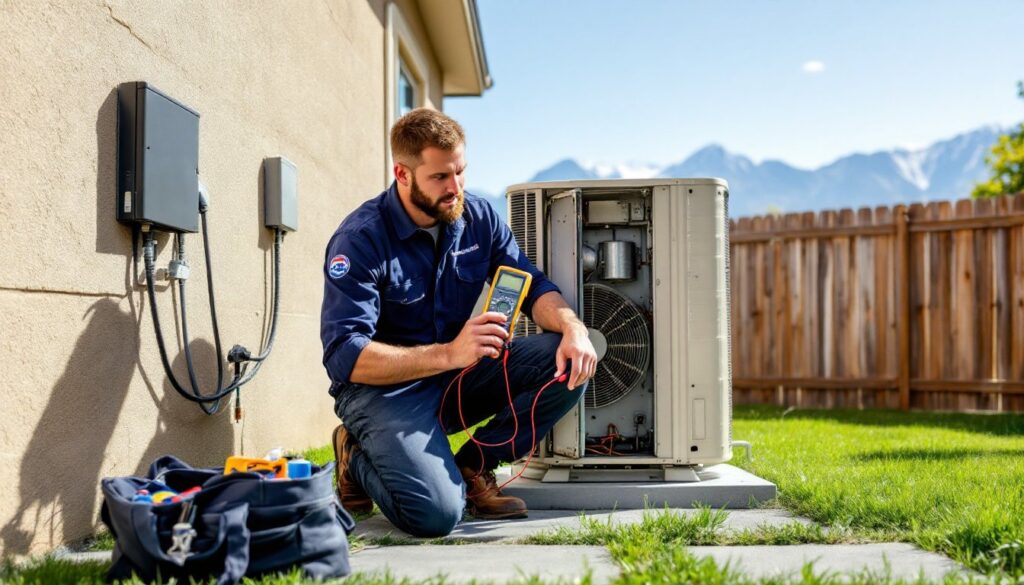
Electrical components like capacitors and contactors wear out. Capacitors (cylindrical metal cans on the condenser) store energy to start the compressor and fan motors. They fail after 5-7 years in high-heat environments. A failing capacitor causes hard starting, humming, or no operation. Techs test capacitance with a multimeter and swap them for $150-250 including labor. Contactors (the relay that switches compressor power) pit and arc over time. Burnt contacts cause intermittent operation. Replacement runs $120-200.
Annual professional inspections should happen every spring before cooling season. A good tech will check refrigerant pressures, measure temperature drop across the evaporator coil (should be 15-20°F), test amp draw on motors, inspect electrical connections for corrosion, and verify airflow at registers. Many contractors offer maintenance contracts ($150-300 per year) that include two visits (spring and fall), priority service, and discounts on repairs. When searching for a technician, platforms that aggregate local HVAC contractors can help compare reviews and estimates.
Ductwork modifications and zoning system installation require load calculations and code compliance. If adding a room or finishing a basement, don’t just tap into the nearest duct. Undersized ducts reduce airflow and overstress the blower motor. A Manual D duct design ensures proper CFM delivery.
Seasonal AC Maintenance Schedule for Salt Lake City Homes
Timing maintenance around Utah’s seasons maximizes system readiness and longevity.
Early Spring (March-April): Schedule professional inspection before the first hot day. Techs are less busy than in June, so appointments are easier to get and sometimes discounted. Replace air filters, clean condenser coils, and test the system by setting the thermostat 5°F below room temperature. Listen for unusual noises, grinding, squealing, or buzzing indicate bearing wear or loose components.
Mid-Summer (July): Check and replace filters. Inspect the condensate drain for clogs. Trim vegetation around the condenser unit, maintain 24 inches clearance on all sides for proper airflow. Overgrown shrubs and stacked firewood block airflow and reduce efficiency by 10-15%. Hose down the condenser coils if cottonwood fluff has accumulated (common in Salt Lake County).
Early Fall (September-October): Replace filters one last time. Pour vinegar down the condensate line. Cover the condenser top (not the sides) with a piece of plywood or a commercial cover to prevent leaves and debris from falling into the fan during winter. Don’t wrap the entire unit in tarps, trapped moisture causes rust.
Winter (November-February): Salt Lake City’s cold snaps don’t require AC, but check that snow and ice aren’t blocking the condenser. If the unit’s buried in snow, gently clear it away. Don’t use sharp tools that could puncture refrigerant lines or bend fins.
Homes with heat pumps (which provide both heating and cooling) need different care. Heat pumps run year-round, so filter changes stay monthly. Defrost cycles in winter are normal, don’t panic when you see steam or hear the reversing valve click.
Common AC Problems Salt Lake City Residents Face
Certain failures pop up repeatedly in the Salt Lake Valley due to climate and typical home construction.
Frozen evaporator coils happen when airflow drops below about 400 CFM per ton of cooling capacity. Causes include dirty filters, closed or blocked registers, low refrigerant, or a failing blower motor. If you see ice on the copper lines or the indoor coil, shut the system off and let it thaw completely (4-6 hours). Replace the filter and check that all supply registers are open. If it freezes again, call a tech to measure airflow and check refrigerant.
Short cycling, the system turning on and off every 5-10 minutes, usually points to an oversized unit, a faulty thermostat, or a dirty condenser coil. Oversized units are common in spec homes built during the 2000s housing boom. Builders often installed 4-ton units in homes that needed 3 tons, hoping to impress buyers with “powerful” cooling. Oversized systems never run long enough to dehumidify properly, leading to clammy indoor air.
High energy bills in summer signal inefficiency. Compare current usage to the same month last year. A 20%+ increase without added cooling load (new rooms, more occupants) points to a problem. Dirty coils, low refrigerant, and duct leaks are the usual suspects. Homeowners researching typical costs for HVAC repairs find that coil cleaning and minor fixes run $150-350, while compressor failure or full refrigerant line replacement can hit $1,800-3,500.
Capacitor failure spikes in July and August when ambient temperatures around the condenser hit 110°F. Heat degrades the dielectric material inside capacitors. If the outdoor fan isn’t spinning or the compressor won’t start, suspect the capacitor. Don’t try to DIY this unless you’re comfortable discharging stored voltage with an insulated screwdriver, capacitors can hold a lethal charge even when power is off.
Poor airflow from registers often traces to closed dampers in the ductwork, disconnected flex ducts in the attic or crawlspace, or an undersized return. Salt Lake City’s older homes (pre-1980) often have single returns that starve the system of air. Adding a second return vent improves circulation and reduces strain on the blower motor.
Thermostat issues frustrate homeowners when the system runs but doesn’t reach setpoint. Causes range from poor placement (on an exterior wall, near a heat source, in direct sunlight) to wiring problems or dead batteries. Replacing a basic mechanical thermostat with a programmable model ($40-120) or smart thermostat ($120-250) improves comfort and saves 10-15% on cooling costs through better scheduling.
Conclusion
Salt Lake City’s heat, dust, and temperature swings demand proactive AC maintenance. Monthly filter checks, seasonal coil cleaning, and annual professional inspections keep systems running efficiently and prevent expensive failures. DIYers can handle most routine tasks with basic tools and a couple of hours. Leave refrigerant work, electrical repairs, and ductwork modifications to licensed techs. A well-maintained AC system in Utah’s climate pays for itself in lower energy bills, fewer emergency calls, and years of added service life.