Table of Contents
ToggleKansas summers don’t mess around, and Overland Park homeowners know that a well-maintained air conditioner isn’t optional, it’s survival gear. With humidity creeping up in June and temperatures regularly hitting the high 90s by July, an AC unit that fails mid-season can turn a home into a sweatbox within hours. Regular maintenance keeps systems running efficiently, extends equipment life, and prevents expensive emergency repairs when you can least afford them. Whether you’re comfortable with basic DIY tasks or prefer leaving complex work to licensed HVAC technicians, understanding what goes into proper AC care helps homeowners make smarter decisions and catch problems early.
Key Takeaways
- Regular AC maintenance in Overland Park extends system lifespan from 10 to 12-15 years and reduces monthly energy bills by 15-25% by keeping coils clean and filters unclogged.
- Homeowners can handle basic AC maintenance tasks like filter replacement every 30-90 days, outdoor unit debris removal, and fin straightening, but refrigerant work requires EPA-certified technicians.
- Schedule professional AC tune-ups in late March or early April before the summer rush to lock in current pricing and ensure priority scheduling.
- Watch for warning signs like ice buildup on refrigerant lines, unusual grinding or hissing noises, short cycling, and dramatic utility bill increases that indicate your AC needs immediate professional attention.
- Professional tune-ups include evaporator coil cleaning, refrigerant charge testing, electrical component inspection, and condensate drain line cleaning—services that require specialized tools and certification.
Why Regular AC Maintenance Matters in Overland Park’s Climate
Overland Park sits in USDA hardiness zone 6a, which means hot, humid summers and occasional late-spring cold snaps that can stress HVAC systems. Air conditioners here work harder than units in milder climates, often running six to eight hours daily during peak season. That workload accelerates wear on compressors, fan motors, and refrigerant lines.
Dirty coils and clogged filters force systems to work 15-25% harder to achieve the same cooling output, driving up monthly electric bills and shortening compressor lifespan. A well-maintained unit typically lasts 12-15 years in this region: neglected systems often fail by year 10. Routine maintenance also preserves manufacturer warranties, many of which require documented annual service to remain valid.
Local humidity creates another challenge: condensate drain lines clog faster with algae and mold, leading to water damage in attics or basements. Regular cleaning prevents overflow and the costly repairs that follow. Catching refrigerant leaks early also matters, EPA regulations under Section 608 of the Clean Air Act require certified technicians to handle refrigerant, and topping off a leaking system without fixing the source wastes money and harms the environment.
Essential AC Maintenance Tasks You Can Do Yourself
Filter Replacement and Cleaning
Disposable fiberglass or pleated filters should be checked monthly during cooling season and replaced every 30-90 days depending on household conditions. Homes with pets, smokers, or high dust levels need monthly swaps: cleaner environments can stretch to 90 days. Standard 1-inch filters fit most furnace returns, but verify dimensions before buying, common sizes include 16x25x1, 20x20x1, and 20x25x1 inches.
Locate the filter slot, usually at the return air grille or inside the air handler cabinet. Slide out the old filter and note the airflow direction arrow printed on the frame, install the new filter with arrows pointing toward the blower. MERV ratings between 8 and 11 strike a good balance for residential use: higher ratings restrict airflow unless your system was designed for them.
Reusable electrostatic or washable filters need monthly rinsing. Remove the filter, spray it down with a garden hose from the clean side to push debris out, let it dry completely (usually 24 hours), then reinstall. Never run the system without a filter, even for a few hours, or dust will coat the evaporator coil.
Outdoor Unit Care and Debris Removal
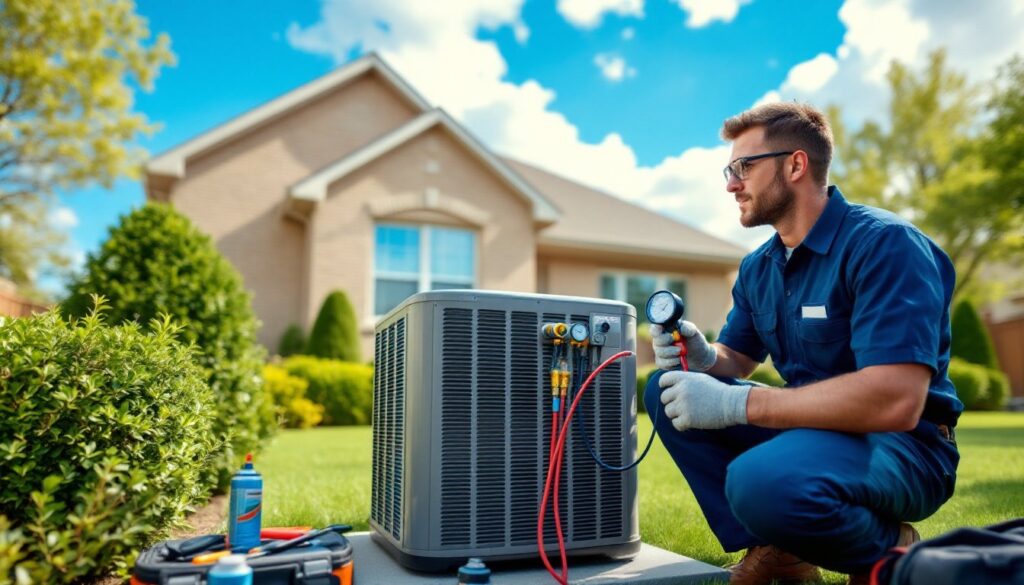
The condenser unit outside does the heavy lifting of heat rejection, and it needs clear airflow to function efficiently. Turn off power at the disconnect box (usually mounted on the house near the unit) before touching anything. Wear gloves and safety glasses, fins are sharp and debris can harbor insects.
Remove leaves, grass clippings, and cottonwood seeds from the exterior fins using a soft brush or shop vacuum with a brush attachment. Straighten bent fins carefully with a fin comb (available at hardware stores for around $8-12), matching the comb’s teeth-per-inch to your unit’s fin spacing, typically 10-14 fins per inch on residential condensers.
Clear at least 24 inches of space around the unit. Trim back shrubs, move mulch piles, and relocate storage items. Condenser efficiency drops noticeably when surrounded by obstructions. Rinse the fins gently from inside out using a garden hose with a spray nozzle, avoid pressure washers, which can bend fins or force water into electrical components. Let the unit dry completely before restoring power.
Check the concrete pad for levelness. If the unit has settled more than a couple degrees off-level, it can strain refrigerant lines and cause compressor wear. Shimming a settled pad is straightforward but usually worth hiring help for, a poorly supported condenser invites expensive problems.
When to Schedule Professional AC Maintenance in Overland Park
Book professional maintenance in early spring, ideally late March or early April, before the seasonal rush when techs are booked solid and temperatures climb. Scheduling ahead also locks in current pricing: emergency calls in July cost significantly more.
Most HVAC contractors offer annual tune-up agreements that include priority scheduling, discounted service rates, and sometimes extended labor warranties. These plans typically run $150-$250 annually in the Overland Park area, though prices vary by company size and service scope. Agreements make sense for homeowners who prefer set-it-and-forget-it maintenance.
Licensed HVAC technicians handle tasks that require specialized tools, refrigerant certification, and electrical knowledge. This includes checking refrigerant charge with gauges, testing capacitor function with multimeters, inspecting electrical connections for arcing or corrosion, and measuring temperature differential across coils. These aren’t DIY jobs, mishandling refrigerant violates federal law, and miswiring a capacitor can destroy a compressor worth $1,200-$2,000.
Homeowners considering hiring local professionals should verify that technicians hold NATE certification (North American Technician Excellence) and that the company carries liability insurance. Overland Park doesn’t require permits for routine maintenance, but any refrigerant work must be performed by EPA-certified personnel under Section 608 guidelines.
What Professional AC Tune-Ups Include
A thorough professional tune-up goes well beyond filter changes. Technicians start by inspecting the evaporator coil inside the air handler, checking for dirt buildup, ice formation, or biological growth. Dirty coils get cleaned with specialized foaming cleaners and rinsed, a process that requires disassembling cabinet panels and protecting surrounding components.
Refrigerant charge testing involves attaching manifold gauges to service ports and comparing pressures to manufacturer specs while the system runs. Undercharged systems (from slow leaks) reduce cooling capacity: overcharged systems stress the compressor. Techs use subcooling and superheat calculations to dial in the precise charge, this requires temperature probes, pressure readings, and reference charts specific to your refrigerant type (R-410A in most systems installed after 2010).
Electrical component testing covers the contactor, capacitor, and relay. Capacitors store the electrical charge that starts the compressor and fan motors: weak capacitors cause hard starting and motor failure. Technicians measure capacitance in microfarads (μF) and replace any component reading more than 5-10% out of spec. Contactors get inspected for pitting, those black burn marks on contact points, and replaced if worn.
Condensate drain lines receive cleaning and biological treatment to prevent clogs. Techs blow compressed air or use a wet/dry vacuum to clear the line, then add algaecide tablets to the drain pan. Clogged drains trigger the float switch (a safety device that shuts down the system when water backs up), which many homeowners mistake for a major failure when it’s just a $10 maintenance issue.
Finally, pros measure temperature split, the difference between return air and supply air temperatures. A properly functioning system in cooling mode should show a 14-22°F differential. Numbers outside that range indicate airflow problems, refrigerant issues, or coil fouling. According to guidance from home improvement experts, documenting baseline performance readings helps track system degradation over time.
Signs Your Overland Park AC Needs Immediate Attention
Some problems can’t wait for the next scheduled maintenance visit. Ice buildup on refrigerant lines or the evaporator coil signals restricted airflow (dirty filter, closed registers, failing blower) or low refrigerant. Shut the system off immediately, running with ice damages the compressor. Let it thaw completely before troubleshooting.
Unusual noises deserve quick attention. Grinding or metal-on-metal screeching from the outdoor unit often means failing bearings in the condenser fan motor or compressor. Loud banging at startup can indicate a failing compressor mount or loose components inside the cabinet. Hissing sounds near refrigerant lines suggest a leak, refrigerant itself is odorless, but the leak often makes a distinctive sound.
Short cycling, when the system runs for only a few minutes before shutting off, wastes energy and stresses components. Causes range from an oversized unit (a sizing mistake made during installation) to a failing thermostat, dirty coils, or refrigerant problems. Track cycle times: most systems should run 10-15 minutes per cycle in moderate weather, longer on very hot days.
Water pooling around the indoor air handler or stains on the ceiling below it point to condensate drain problems or, worse, a cracked drain pan. Catch this early before water damages drywall, insulation, or structural framing.
Dramatic utility bill increases, 20% or more compared to the same month last year, without corresponding weather changes indicate efficiency loss. Compare current bills to past summers: Evergy (the local utility) provides 12-month usage history online. For detailed project cost breakdowns and repair estimates, homeowners can compare local contractor quotes before committing to major repairs.
If the outdoor unit runs but produces no cool air, or if the system won’t start at all, check the obvious first: verify the thermostat is set to “cool” and below room temperature, inspect the circuit breaker and outdoor disconnect switch, and confirm the filter isn’t completely clogged. If those check out, call a licensed tech, compressor or control board failures require professional diagnosis and often run $600-$2,500 depending on parts and labor.