Table of Contents
ToggleNorth Las Vegas homeowners know the stakes: when the AC fails in July, temperatures inside can hit triple digits in hours. The desert climate doesn’t just stress air conditioners, it accelerates wear, clogs filters with dust, and punishes neglected units with costly breakdowns. Regular maintenance isn’t optional here: it’s the difference between a $150 service call and a $6,000 emergency compressor replacement. This guide walks through what homeowners can handle themselves, what requires a licensed HVAC tech, and how to time maintenance around the Mojave Desert’s extreme seasonal swings.
Key Takeaways
- Regular AC maintenance in North Las Vegas prevents costly breakdowns by catching efficiency loss and refrigerant leaks before they escalate in extreme desert heat.
- Replace air filters monthly during cooling season and inspect the outdoor condenser unit quarterly to combat desert dust and maintain system efficiency.
- Annual professional AC maintenance starting in March or April costs $100–150 and saves homeowners from emergency repairs and compressor replacements that can exceed $6,000.
- Monthly filter changes, routine debris removal, and conduit drain cleaning are DIY tasks that extend system lifespan and lower energy bills significantly.
- Hiring EPA-certified technicians for refrigerant service, electrical work, and deep coil cleaning ensures compliance with federal regulations and maintains warranty coverage.
Why Regular AC Maintenance Is Critical in North Las Vegas
North Las Vegas sits in one of the harshest HVAC environments in the country. Summer temperatures routinely exceed 105°F from June through September, forcing air conditioners to run 12+ hours daily. That’s double the duty cycle of units in temperate climates.
Desert dust infiltrates everything. Fine particulate from the surrounding basin settles on condenser coils, clogs fins, and coats evaporator surfaces. A unit that might run three months between filter changes in Seattle needs monthly attention here.
Neglected systems lose 15-25% efficiency annually in desert conditions. That translates to higher electric bills, significant when cooling costs already account for 50-70% of summer energy use in Southern Nevada. A dirty evaporator coil forces the compressor to work harder, shortening its lifespan from 15 years to under 10.
Refrigerant leaks escalate faster in high-heat environments. Thermal expansion and contraction stress copper line sets and brazed joints. A slow leak that might take two seasons to cause problems elsewhere can cripple a system in one North Las Vegas summer.
Building codes in Clark County now require HVAC systems to meet minimum SEER ratings (currently SEER 14 for split systems), but efficiency drops off a cliff without maintenance. A well-maintained 14 SEER unit outperforms a neglected 16 SEER model.
The financial math is straightforward: annual professional maintenance runs $100-150. An emergency service call starts at $200, and compressor replacement costs $1,800-3,500. Homeowners who skip maintenance typically face a major repair or replacement 3-5 years sooner than those who don’t.
Essential AC Maintenance Tasks You Can Do Yourself
Homeowners can handle several critical maintenance tasks without special tools or HVAC certification. These jobs prevent the majority of common failures and keep units running efficiently between professional service visits.
Filter Replacement and Cleaning
Disposable pleated filters should be replaced monthly during cooling season in North Las Vegas, not the 90-day interval printed on the package. Desert dust loads are too heavy for extended cycles. Check the filter slot dimension (common sizes: 16x20x1, 20x25x1, 14x25x1) and buy the correct size. Nominal and actual dimensions match for filters, unlike lumber.
Use MERV 8-11 filters for most residential systems. Higher ratings (MERV 13+) restrict airflow unless the system was specifically designed for them, forcing the blower motor to work harder. Lower ratings (MERV 6 or fiberglass panels) don’t capture enough particulate.
Locate the filter slot, usually in the return air duct near the air handler, or in a slot on the furnace/air handler cabinet itself. Turn off the system at the thermostat before removing the filter. Note the airflow direction arrows on the filter frame: they must point toward the blower motor. A backwards filter reduces efficiency by 20-30%.
Washable electrostatic filters can work in low-dust homes, but they require monthly cleaning with a garden hose and complete drying (4-6 hours) before reinstallation. Most homeowners find disposables more convenient.
Set a phone reminder for the first of each month from April through October. Miss two filter changes in summer and you’ll see it on your electric bill.
Outdoor Unit Care and Debris Removal
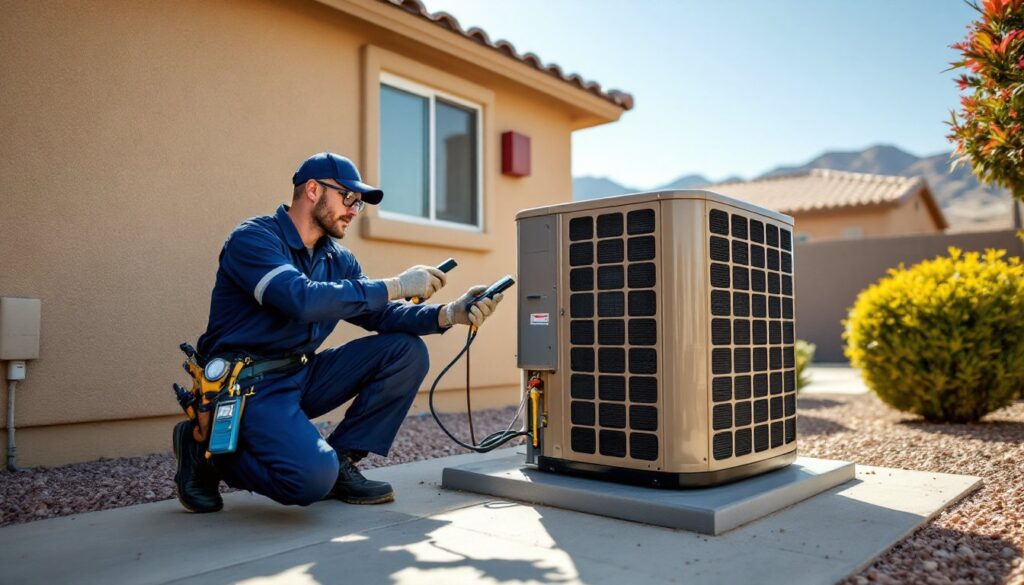
The condenser unit (the outdoor box with the fan on top) needs quarterly attention, more if positioned near landscaping or during dust storms.
Safety first: Shut off power at the disconnect box mounted on the exterior wall near the unit, it’s a gray metal box with a pull-out block or flip lever. Don’t just turn off the thermostat: you need zero power to the unit.
Clear debris from the top grille and around the base. Remove leaves, cottonwood seeds, tumbleweeds, and any vegetation within 24 inches of the cabinet. Restricted airflow forces the compressor to run hotter and work harder.
Inspect the aluminum fins (thin vertical or horizontal metal strips covering the sides). Gently straighten bent fins with a fin comb (under $10 at hardware stores) or a butter knife, work carefully, the aluminum tears easily. Badly damaged fin sections (more than 30% bent) reduce heat exchange efficiency.
Spray the fins from inside out with a garden hose, not a pressure washer, which will bend fins. Remove dust and cottonwood buildup. Let the unit dry 30 minutes before restoring power.
Check that the concrete pad is level. Desert soil shifts, and a tilted unit (more than 1/4 inch off level) can cause refrigerant flow issues and premature compressor wear. Releveling requires shims or mudjacking, call a pro if the pad has sunk more than an inch.
Trim back any vegetation. Oleander, desert willow, and other common North Las Vegas landscaping should stay at least two feet from the unit. Blocked airflow is the second-leading cause of compressor failure after refrigerant loss.
Many homeowners find it helpful to review ratings and feedback from local heating and air conditioning pros in North Las Vegas when considering whether to upgrade service contracts or schedule additional professional visits.
When to Call a Professional for AC Service
Some maintenance tasks require EPA Section 608 certification, specialized tools, or electrical knowledge beyond DIY scope. Attempting these without credentials risks equipment damage, warranty voidance, and legal liability.
Refrigerant service is federally regulated. Handling refrigerants (R-410A in modern systems, R-22 in pre-2010 units) without certification violates Clean Air Act provisions. If the system is low on refrigerant, there’s a leak, refrigerant doesn’t “get used up.” A tech must locate the leak, repair it, evacuate the system, and recharge to the manufacturer’s spec. DIY recharge kits sold at auto parts stores are for vehicle AC only and will damage home systems.
Annual professional inspections should include:
• Refrigerant pressure and superheat/subcooling measurements
• Electrical connections tightened and tested for voltage/amperage
• Condensate drain cleared and treated (algae growth is common in desert humidity)
• Blower motor lubrication (if not sealed bearings)
• Evaporator and condenser coil deep cleaning
• Thermostat calibration and cycling tests
• Ductwork inspection for leaks (20-30% of cooled air is lost to duct leaks in typical homes)
Schedule this service in March or April, before peak season when HVAC companies are slammed. Expect to pay $100-150 for a thorough tune-up. Avoid “free inspection” offers tied to finance deals: they’re often sales pitches for unnecessary replacements.
Call immediately if:
• Ice forms on refrigerant lines or the evaporator coil (indicates airflow blockage or refrigerant issues)
• The unit short-cycles (runs less than 10 minutes before shutting off)
• Circuit breakers trip repeatedly
• Strange noises, grinding, squealing, or banging (bearings, belts, or loose components)
• Warm air blows from vents when the system’s running
Permit requirements: Replacing an AC unit, upgrading electrical service to the condenser, or modifying ductwork typically requires permits in North Las Vegas (governed by Clark County building codes). Licensed contractors pull permits as part of their service. DIY replacements are allowed on like-for-like swaps in some jurisdictions, but refrigerant handling still requires certification.
Smart thermostats and home automation systems are gaining popularity among homeowners who want better control over cooling costs, and many resources like digital home technology guides provide detailed comparisons for integrating these devices with HVAC systems. But, installation should follow manufacturer instructions carefully to avoid damaging control boards.
Seasonal AC Maintenance Schedule for North Las Vegas Homes
Desert climate demands a maintenance calendar that differs from manufacturer recommendations designed for national averages.
March (Pre-Season):
• Schedule professional tune-up before April heat arrives
• Replace filters
• Clear winter debris from outdoor unit
• Test system run cycle and listen for unusual sounds
• Check thermostat batteries if applicable
April–September (Cooling Season):
• Replace filters first of every month
• Hose down condenser fins monthly (more often after dust storms)
• Monitor energy bills for unexpected spikes (indicates efficiency loss)
• Keep condensate drain clear, pour 1/4 cup white vinegar down drain monthly to prevent algae
October (Post-Season):
• Final filter replacement
• Deep clean outdoor unit
• Inspect ductwork in attic/crawlspace for pest intrusion or damage
• Cover outdoor unit only if in area with heavy leaf fall: otherwise leave uncovered (condensation can cause rust under covers in mild winters)
November–February (Off-Season):
• Check on unit monthly, ensure nothing’s nesting in it
• Clear any debris accumulation
• Consider scheduling next year’s spring service in February for early-bird pricing
North Las Vegas occasionally sees late spring or early fall heat spikes, days hitting 95°F+ in April or October. Don’t wait until the calendar says summer to prep the system. When forecasts show sustained highs above 90°F, verify the AC is ready.
Cost planning tools such as those available through project cost estimators can help homeowners budget for both routine maintenance and potential repairs, though prices fluctuate with refrigerant costs and local labor rates.
Multi-unit properties or homes with two AC systems need doubled attention. Don’t assume upstairs and downstairs units are on the same maintenance schedule, they often have different run times and wear patterns.
Keep a maintenance log, a simple notebook or phone note listing dates of filter changes, professional service, and any issues. It helps spot patterns (“condenser needs cleaning every 6 weeks, not 12”) and provides documentation for warranty claims or home sales.
Conclusion
AC maintenance in North Las Vegas isn’t a set-it-and-forget-it task. The desert accelerates everything, dust accumulation, thermal stress, efficiency loss. Monthly filter changes and quarterly outdoor unit care handle the majority of homeowner-level maintenance. Annual professional service catches the rest before small issues become expensive failures. Start the habit now, and the system will outlast its warranty by years.