Table of Contents
ToggleCape Coral homeowners know the drill: running the AC isn’t optional, it’s survival. With heat indexes pushing triple digits and humidity thick enough to cut with a knife from April through October, your air conditioning system works harder here than in most of the country. That relentless demand means regular maintenance isn’t just recommended, it’s the difference between steady cooling and a $6,000 emergency replacement in July. This guide walks through what Cape Coral residents can handle themselves, when to call in the pros, and how to keep that compressor humming through another sweltering summer.
Key Takeaways
- AC maintenance in Cape Coral is essential due to the extreme subtropical climate, where systems run 8-10 months per year and coastal salt air accelerates equipment wear and corrosion.
- DIY maintenance tasks like filter replacement every 30 days, quarterly condenser cleaning, and monthly drain line flushing can prevent most service calls and extend your system’s lifespan by 5-6 years.
- Refrigerant leaks, electrical failures, and professional annual tune-ups require EPA-certified technicians or licensed electricians to ensure safety, warranty compliance, and compliance with Florida Building Code requirements.
- Regular AC maintenance prevents costly emergency repairs—ignoring maintenance can lead to $6,000+ compressor replacements and increases summer energy bills by $30-50 monthly due to reduced efficiency.
- Time Cape Coral AC maintenance to actual weather patterns: schedule professional tune-ups in March before peak cooling season, avoid July-August service backlogs, and perform seasonal filter and drain line maintenance four times yearly.
- Professional maintenance agreements typically cost $150-250 annually and include two service visits plus repair discounts, saving money compared to emergency service calls that range from $150-2,500+ depending on the failed component.
Why Regular AC Maintenance Matters in Cape Coral’s Climate
Cape Coral’s subtropical climate creates a perfect storm for AC stress. Systems here run 8-10 months per year, compared to 4-6 months in temperate zones. That extended operating season accelerates wear on compressors, fan motors, and refrigerant lines.
Salt air from the Gulf adds another layer of challenge. Coastal corrosion attacks outdoor condenser coils and electrical connections faster than inland units experience. A neglected system in Cape Coral can lose 15-20% efficiency in a single season as dirt and oxidation build up on heat exchange surfaces.
Regular maintenance extends system lifespan from the typical 10-12 years to 15-18 years in many cases. It also keeps energy bills in check, a dirty coil or clogged filter forces the compressor to run longer, spiking electricity costs by $30-50 monthly during peak summer. With the average Cape Coral electric bill already topping $180 in July and August, that’s real money.
Skipping maintenance also voids most manufacturer warranties. Most require proof of annual professional service to honor compressor or parts coverage, which can otherwise cost thousands out-of-pocket.
Essential AC Maintenance Tasks You Can Do Yourself
Homeowners can handle several critical maintenance tasks without specialized tools or HVAC certification. These don’t require refrigerant handling or electrical work beyond basic safety precautions.
Filter replacement tops the list. In Cape Coral’s dusty, pollen-heavy environment, change 1-inch pleated filters every 30 days during cooling season. If you use a thicker 4-inch media filter, swap it every 90 days. Mark your calendar, this single task prevents most service calls.
Outdoor condenser cleaning takes 20 minutes quarterly. Shut off power at the disconnect box near the unit (it looks like a small gray breaker panel). Use a garden hose with a spray nozzle to rinse debris from the condenser fins, working from inside outward. Don’t use a pressure washer: the force bends the thin aluminum fins. Trim vegetation back at least 24 inches on all sides for proper airflow.
Drain line maintenance prevents the water damage common in Florida homes. Locate the PVC condensate drain line (usually ¾-inch white pipe running from the indoor unit). Pour ¼ cup of distilled white vinegar or a condensate pan tablet down the line monthly to prevent algae clogs. If the line has a cleanout tee, check it for standing water, a sign of blockage.
Inspect the thermostat settings seasonally. Verify it’s set to “cool” mode and the temperature differential makes sense (most Cape Coral homes run 74-78°F). If you have a programmable or smart thermostat, adjust schedules as daylight hours shift.
Safety note: Always shut off power at the breaker panel before touching any AC components. Wear safety glasses and work gloves when cleaning the condenser.
When to Call a Professional for AC Service
Some tasks require EPA-certified technicians or licensed electricians. Don’t guess on these, improper work creates safety hazards and kills efficiency.
Call a pro for refrigerant issues. If the system runs constantly but doesn’t cool, ice forms on the refrigerant lines, or you hear hissing near the outdoor unit, you likely have a leak or low charge. Federal law requires certification to handle refrigerants like R-410A. Topping off without fixing the leak wastes money and harms the environment.
Electrical problems need licensed help. Tripped breakers that won’t reset, burning smells, or sparking at the disconnect box signal dangerous faults. Cape Coral operates under the Florida Building Code, which requires permits and inspections for electrical work on HVAC systems.
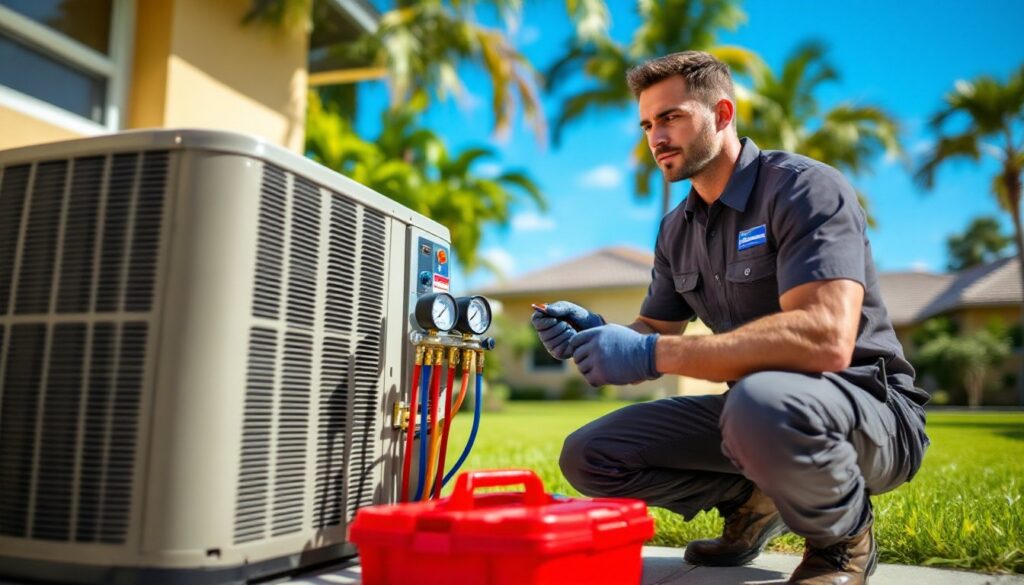
Annual professional tune-ups should include tasks homeowners can’t safely perform: checking refrigerant pressures with manifold gauges, measuring amp draw on the compressor and blower motor, testing capacitor microfarad ratings, inspecting electrical contactors for pitting, and verifying correct airflow (typically 400 CFM per ton of cooling capacity).
Many Cape Coral residents maintain relationships with qualified contractors who can respond to emergency repairs when systems fail during heat waves. An established service agreement often includes priority scheduling and discounted rates.
If you’re adding capacity, installing a new system, or modifying ductwork, you’ll need Lee County building permits. Work that affects structural members, electrical service panels, or refrigerant lines falls under permit requirements. Professional contractors pull these as part of their service.
Seasonal AC Maintenance Checklist for Cape Coral Homeowners
Cape Coral’s “seasons” don’t match the calendar, so time your maintenance to actual weather patterns and system demand.
March (Pre-Cooling Season):
- Schedule professional tune-up before temperatures hit 90°F consistently
- Replace air filter
- Clean outdoor condenser coils
- Test thermostat accuracy with a separate thermometer
- Check condensate drain line flow
June (Peak Summer Prep):
- Replace filter (again, it’s been 30 days)
- Verify outdoor unit has clear airflow: trim new growth
- Listen for unusual sounds: grinding, squealing, or rattling indicate worn bearings or loose components
- Confirm programmable thermostat settings match your occupancy schedule
September (Hurricane Season):
- Clear debris from around outdoor unit after storms
- Check that condenser pad is level (settling soil can tilt the unit, stressing refrigerant lines)
- Inspect roof penetrations for the refrigerant line set: tropical storms expose poor sealing
- Replace filter
December (“Cool” Season):
- Clean or replace filter even if the system runs less
- Flush condensate line one final time before reduced usage
- Schedule any needed repairs before the next March rush
This four-point calendar aligns with when Cape Coral HVAC contractors have availability. Avoid scheduling tune-ups in July or August when service calls backlog by weeks. Following seasonal maintenance schedules specific to Florida’s climate prevents most breakdowns.
Common AC Problems in Cape Coral and How to Prevent Them
Cape Coral’s environment creates predictable AC failures. Catching these early saves major repair bills.
Condensate drain clogs top the list. High humidity means your AC pulls gallons of water from the air daily. Algae and slime grow in the drain pan and PVC lines, causing backups that trip the float switch and shut down the system. Monthly vinegar treatments prevent this, but if water overflows, you’ll need a wet/dry vacuum to clear the line or call for a professional flush.
Corroded electrical connections happen fast near the coast. Salt air oxidizes wire terminals, contactors, and capacitor connections. Green or white crusty buildup on wiring indicates corrosion. Annual professional service includes cleaning and tightening these connections before they cause no-start conditions.
Dirty evaporator coils hide inside the air handler. Unlike the outdoor condenser you can easily hose off, the evaporator coil collects dust on the indoor side. Over 2-3 years, this buildup chokes airflow and freezes the coil. Professional service includes accessing the sealed air handler and chemically cleaning the evaporator, not a DIY task in most systems.
Refrigerant leaks develop where vibration and corrosion meet. The joint between copper refrigerant lines and the condenser coil deteriorates in coastal climates. Small leaks start as reduced cooling capacity and end as complete failures. There’s no prevention homeowners can perform: only professional pressure testing during annual service catches these early.
Thermostat failures increase as units age. Lee County’s frequent lightning strikes and power fluctuations fry low-voltage thermostat circuits. Surge protectors on the air handler help, but they’re often not installed in older homes.
Cost of AC Maintenance in Cape Coral: What to Expect
Understanding AC maintenance costs helps homeowners budget and avoid surprise bills. Prices in Cape Coral run slightly higher than inland Florida cities due to coastal demand and cost of living.
Professional tune-ups range from $75-150 for a standard service call. This typically includes filter replacement, coil inspection, refrigerant pressure check, electrical testing, and condensate system service. Some contractors offer annual maintenance agreements for $150-250/year that include two visits (spring and fall) plus discounts on repairs.
DIY maintenance costs almost nothing. A box of 12 pleated 1-inch filters runs $25-40 at home centers. A gallon of white vinegar for drain line treatments costs under $5 and lasts all year. Coil cleaner spray (if you choose to use it on the condenser) costs $8-12 per can.
Repair costs vary wildly by component. Replacing a failed capacitor runs $150-300 including the service call. A new blower motor costs $400-800 installed. Compressor replacement hits $1,500-2,500, and at that point many homeowners consider full system replacement instead.
Full AC replacement in Cape Coral averages $5,500-8,500 for a complete 3-ton to 4-ton system, including removal of the old unit, new air handler, condenser, line set, electrical work, and permits. High-efficiency systems with SEER ratings above 16 cost more upfront but cut monthly electric bills.
Estimating costs accurately requires getting multiple quotes from licensed contractors. Using online cost estimation tools gives ballpark figures, but actual prices depend on system size, brand, installation complexity, and whether ductwork modifications are needed. Always verify contractors hold active Florida state licenses and Lee County occupational licenses before hiring.
Conclusion
AC maintenance in Cape Coral isn’t optional, it’s equipment survival in one of Florida’s most demanding climates. Monthly filter changes, quarterly condenser cleaning, and annual professional service keep systems running efficiently through extended cooling seasons. Handle the routine tasks yourself to save money, but recognize when refrigerant work, electrical issues, or major repairs need certified technicians. The cost of prevention beats emergency replacement every time, especially when the next heat wave is always just around the corner.