Table of Contents
ToggleYour air conditioner is one of those systems you don’t think about until it stops working, usually on the hottest day of summer when HVAC techs are booked solid. Annual maintenance isn’t just a suggestion from service companies looking to fill their calendars: it’s a practical investment that extends equipment life, prevents expensive breakdowns, and keeps energy bills in check. A well-maintained AC unit can last 15–20 years, while a neglected one might start failing after 10. This guide walks through what happens during professional maintenance, which tasks homeowners can handle themselves, and when to call for backup.
Key Takeaways
- Annual AC maintenance extends your system’s lifespan to 15–20 years and prevents costly compressor repairs ($1,500–$2,500) by catching small problems early.
- Professional AC annual maintenance typically costs $75–$200 and includes condenser coil cleaning, refrigerant checks, electrical inspections, and evaporator coil cleaning—essential for warranty coverage.
- Energy efficiency drops 5% yearly without maintenance, adding hundreds of dollars to cooling costs, while a properly maintained system delivers a consistent 14–22°F temperature drop across the evaporator coil.
- Schedule your annual maintenance in early spring (March–April) before peak season to avoid long wait times and have time to address repairs before hot weather arrives.
- Homeowners can extend system efficiency between professional visits by changing air filters monthly, clearing debris around the outdoor unit, and treating condensate drain lines with vinegar or algaecide tablets.
- Watch for warning signs like weak airflow, ice buildup, strange noises, or water pooling around the indoor unit—these require immediate professional attention to prevent compressor damage and system failure.
Why Annual AC Maintenance Is Essential for Your Home
Air conditioners are mechanical systems with moving parts, refrigerant lines, electrical connections, and condensate drainage, all of which degrade over time. Skipping maintenance doesn’t just risk a breakdown: it quietly drives up operating costs and shortens the system’s lifespan.
Energy efficiency drops 5% per year without regular tune-ups, according to industry studies. Dirty coils, clogged filters, and low refrigerant force the compressor to work harder, consuming more electricity for the same cooling output. For a central AC system running 6–8 months a year, that inefficiency adds up to hundreds of dollars annually.
Annual service also catches small problems before they cascade. A refrigerant leak caught early might cost $150–$300 to repair. Ignore it, and you’ll eventually replace a burned-out compressor for $1,500–$2,500. Same goes for electrical connections: loose terminals cause arcing, which damages control boards and contactors.
Most manufacturers require proof of annual maintenance to honor warranty claims. If your 3-year-old condensing unit fails and you’ve never had it serviced, expect to pay out of pocket even if the part is technically under warranty.
Finally, there’s indoor air quality. A neglected system circulates dust, mold spores, and allergens. The evaporator coil, which sits in a dark, damp environment, is a magnet for mold growth when condensate drainage slows or clogs. Regular cleaning and drain line treatment keep the air moving through your ducts cleaner.
What’s Included in a Professional AC Maintenance Visit
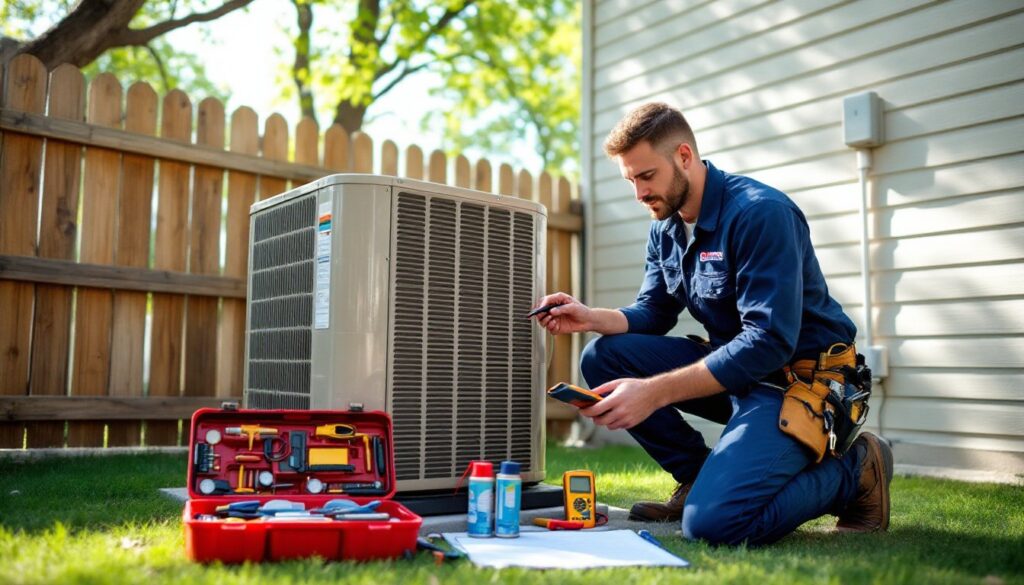
A thorough professional tune-up takes 60–90 minutes and covers both the indoor air handler (or furnace with evaporator coil) and the outdoor condensing unit. Here’s what a qualified HVAC technician should do:
Outdoor Condensing Unit:
- Clean the condenser coils using a coil cleaner and low-pressure water or compressed air (high-pressure washing can bend fins)
- Straighten any bent fins with a fin comb to restore airflow
- Check refrigerant charge with gauges: add refrigerant if low and identify any leaks
- Inspect and tighten electrical connections at the contactor, capacitor, and compressor terminals
- Test the start/run capacitor with a multimeter (weak capacitors cause hard starts and compressor damage)
- Lubricate the fan motor bearings if the motor has oil ports (many modern sealed motors don’t require this)
- Clear debris from the unit and verify at least 2 feet of clearance around the unit for proper airflow
Indoor Air Handler/Evaporator Coil:
- Replace or clean the air filter (disposable filters should be changed monthly during cooling season)
- Clean the evaporator coil with no-rinse foaming coil cleaner
- Clear the condensate drain line and pan: treat with algaecide tablets or vinegar to prevent clogs
- Check blower motor operation and clean blower wheel if dusty
- Verify proper airflow across the coil (typically 400 CFM per ton of cooling capacity)
- Test thermostat calibration and operation
The technician should also measure temperature split (difference between return and supply air). A properly charged system typically shows a 14–22°F drop across the evaporator coil, though this varies with outdoor temperature and humidity.
After service, ask for a written report detailing what was done and any issues found. Reputable techs will photograph problems and explain needed repairs without high-pressure sales tactics.
DIY AC Maintenance Tasks You Can Handle Yourself
Homeowners can handle several maintenance tasks between professional visits. These won’t replace annual service but will keep the system running efficiently and reduce service call frequency.
Monthly During Cooling Season:
- Replace the air filter. Use the size printed on the filter frame (e.g., 16x25x1). A MERV 8–11 pleated filter balances filtration and airflow. Higher MERV ratings restrict airflow unless your system is designed for them.
Spring and Fall:
- Clean around the outdoor unit. Shut off power at the disconnect box, then remove leaves, grass clippings, and debris. Trim vegetation back to at least 2 feet from the unit. Check that the unit sits level: settling can stress refrigerant lines.
- Straighten condenser fins. Carefully use a fin comb (around $8 at hardware stores) to straighten bent aluminum fins. Work gently, fins are thin and tear easily.
- Clean the condensate drain line. Locate the drain line (usually ¾” PVC exiting near the air handler). Pour a cup of white vinegar or a pan tablet down the line to kill algae. If water backs up into the drain pan, the line is clogged and needs clearing with a wet/dry vac or air pressure.
- Check the drain pan. If the pan under the evaporator coil shows rust or cracks, it needs replacement before it leaks and damages ceilings.
Safety note: Always shut off power at both the thermostat and the breaker/disconnect before working on any AC components. The outdoor disconnect box should have a pull-out fuse block or breaker.
What to skip: Don’t attempt to check refrigerant levels, test capacitors, or clean evaporator coils deeply embedded in the air handler. Those tasks require gauges, meters, and sometimes partial disassembly. Homeowners who follow a seasonal maintenance checklist often catch small issues before they require emergency repairs.
Keep a log of filter changes and any unusual sounds or performance issues. That history helps techs diagnose problems faster during service calls.
When to Schedule Your Annual AC Maintenance
Schedule service in early to mid-spring, ideally March or April, before temperatures climb and HVAC companies hit their busy season. Waiting until May or June means longer wait times, rushed appointments, and higher service rates in some markets.
Early scheduling also lets you address any needed repairs before you actually need the AC. If the tech finds a failed capacitor or refrigerant leak, you’ve got time to get parts and schedule the fix without sweating through a heat wave.
Some homeowners prefer fall maintenance if they live in climates with mild summers and heavy heating seasons, allowing the tech to service both the AC and furnace in one visit. That’s fine, but spring service still makes sense for AC-dominant climates.
Maintenance contracts from HVAC companies often include priority scheduling, which means you’re not competing with emergency calls when you need service. Contracts typically run $150–$300/year and include one or two annual visits plus discounts on repairs. They’re worth considering if you have an aging system or want to lock in service availability.
Don’t wait for problems to schedule maintenance. By the time you notice weak airflow or warm air, damage is already occurring. Proactive service according to maintenance audit practices prevents most common AC failures and keeps the system running at peak efficiency through the entire cooling season.
How Much Does AC Annual Maintenance Cost?
Expect to pay $75–$200 for a standard maintenance visit from a licensed HVAC contractor. Price varies by region, company size, and what’s included. Urban markets and areas with high cost of living skew toward the upper end: rural areas may run cheaper.
What affects cost:
- System type: Central AC maintenance is straightforward. Heat pumps, which provide both heating and cooling, may cost slightly more due to additional components. Ductless mini-splits with multiple indoor heads cost more per visit due to the number of units.
- Service scope: Basic tune-ups cover inspection and cleaning. Premium packages may include coil deep-cleaning, duct inspection, or indoor air quality assessments.
- Repairs: Quoted prices typically cover labor and inspection only. Parts and repair labor are extra. Adding refrigerant costs $50–$150 per pound depending on refrigerant type (R-410A is becoming harder to source as R-32 and other refrigerants phase in).
Maintenance contracts bundling annual service often break down to $12–$25/month. Many include perks like no-charge service calls, discounted repairs, and faster response times. If you’ve got an AC over 10 years old, the peace of mind can justify the cost.
DIY savings: Homeowners who handle filter changes, outdoor unit cleaning, and drain line maintenance between professional visits can sometimes extend service intervals to 18 months without major risk, though this isn’t recommended for systems under warranty or in heavy-use climates. Resources like HomeAdvisor offer cost calculators and contractor comparisons to help estimate regional pricing.
Avoid companies advertising suspiciously low rates ($49 or $59 tune-ups). Those are often loss leaders designed to get a tech in your home to upsell repairs, some legitimate, some not. Pay a fair price for thorough service from a company with solid reviews and transparent pricing.
Signs Your AC Needs Immediate Professional Attention
Some issues shouldn’t wait for the next scheduled maintenance. Call a tech right away if you notice:
- Weak or warm airflow: Indicates refrigerant loss, a failing compressor, or a frozen evaporator coil. Continuing to run the system can cause compressor damage.
- Ice buildup on the refrigerant lines or evaporator coil: Usually caused by low refrigerant, restricted airflow, or a bad metering device. Shut the system off and call for service. Running a frozen coil can flood the compressor with liquid refrigerant.
- Strange noises: Grinding, squealing, or banging from the outdoor unit often signals a failing fan motor, loose parts, or compressor issues. Indoor rattling may mean a loose blower wheel or failing motor mounts.
- Tripped breakers or blown fuses: Electrical issues can indicate a short circuit, failed capacitor, or compressor drawing too much current. Don’t just reset the breaker and ignore it.
- Water pooling around the indoor unit: A clogged drain line or cracked drain pan. If not addressed, water will damage flooring, drywall, and framing.
- Burning smell or visible smoke: Shut off power immediately at the breaker. This suggests electrical failure or overheating components.
- Short cycling (system turns on and off every few minutes): Points to an oversized system, refrigerant issues, thermostat problems, or a failing compressor.
Experts at Angi recommend logging any performance changes and noting when they occur. Intermittent problems are harder to diagnose, so detailed notes help techs reproduce the issue.
Some problems, like refrigerant leaks or compressor failures, are expensive enough that replacement may be more cost-effective than repair, especially for systems over 12–15 years old. A good tech will walk you through the math on repair vs. replacement without pushing either direction.
Conclusion
Annual AC maintenance isn’t glamorous, but it’s one of the highest-return investments a homeowner can make. An hour of a technician’s time and $100–$200 can prevent thousands in emergency repairs, reduce monthly cooling costs, and add years to the system’s lifespan. Between professional visits, stay on top of filter changes, keep the outdoor unit clear, and watch for early warning signs. Trusted resources like Good Housekeeping offer product reviews and guides that help homeowners make informed decisions about HVAC care and equipment upgrades. Your AC works hard when you need it most, give it the routine care it needs to stay reliable.