Table of Contents
ToggleBosch dishwashers are workhorses, engineered for quiet, efficient operation and designed to last well over a decade with proper care. But like any appliance that handles food debris, grease, and hard water daily, they need regular attention to maintain peak performance. Neglect the basics, and you’ll end up with cloudy glassware, foul odors, and premature component failure. The good news? Most Bosch dishwasher maintenance tasks take less than 15 minutes and require nothing more than a screwdriver and some white vinegar. This guide walks through the cleaning routines, inspections, and daily habits that keep a Bosch running smoothly for years.
Key Takeaways
- Regular Bosch dishwasher maintenance—cleaning filters monthly and running quarterly deep cleans with vinegar—prevents costly repairs and extends the appliance’s lifespan to 15+ years.
- Most Bosch dishwasher maintenance tasks require less than 15 minutes and only basic supplies like white vinegar and a soft brush, making upkeep accessible for any homeowner.
- Clean the filter and spray arm nozzles monthly to prevent water recirculation of food debris, which causes cloudy glassware and strain on the wash pump.
- Hard water mineral deposits are the leading cause of declining efficiency; use rinse aid and run quarterly vinegar cycles to dissolve buildup on heating elements and nozzles.
- Proper loading and daily habits—such as scraping instead of pre-rinsing and running the kitchen faucet until hot before a cycle—improve cleaning performance and reduce energy consumption.
- Inspect door gaskets regularly for cracks and replace the water supply hose every 5–7 years to prevent leaks that damage cabinetry and flooring.
Why Regular Maintenance Matters for Your Bosch Dishwasher
Bosch dishwashers use a filtration system, not a garbage disposal grinder, to handle food particles. That means the filter catches everything, from rice grains to eggshell fragments. When filters clog, water recirculates dirty, leaving residue on dishes and straining the wash pump.
Hard water compounds the problem. Mineral deposits accumulate on heating elements, spray arm nozzles, and interior surfaces, reducing efficiency and eventually causing mechanical failures. A dishwasher working harder to compensate for buildup uses more energy and wears out faster.
Routine cleaning prevents these issues and catches small problems before they become expensive repairs. A jammed spray arm or a cracked door gasket is easy to fix during a monthly check. Ignored, it leads to poor cleaning performance or water leaks that damage cabinetry.
Bosch recommends specific maintenance intervals in the owner’s manual, and following them can extend the machine’s lifespan from the typical 10 years to 15 or more. Most tasks don’t require tools or special products, just consistency.
Monthly Cleaning Tasks to Prevent Buildup and Odors
Clean the Filter and Spray Arms
The filter assembly sits in the bottom of the tub, usually beneath the lower spray arm. To access it:
- Remove the bottom dish rack.
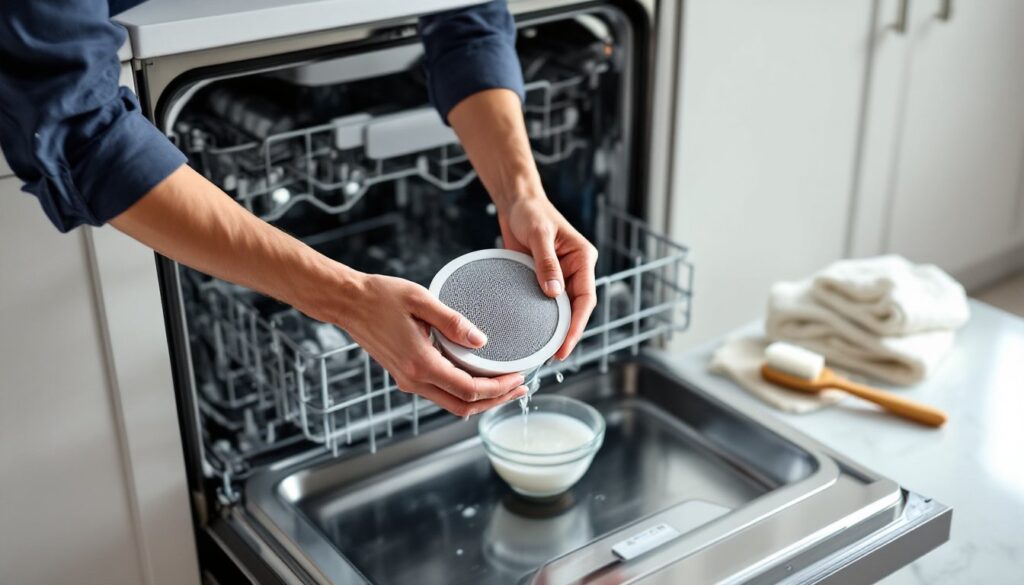
- Turn the cylindrical filter counterclockwise and lift it out (some models have a flat mesh filter underneath, remove that too).
- Rinse both components under hot running water, using a soft brush to dislodge trapped debris. Avoid abrasive scrubbers that can damage the mesh.
- Inspect the filter for cracks or tears. A damaged filter lets particles recirculate, so replace it if compromised.
- Reinstall by aligning the arrows and twisting clockwise until it locks.
Next, check the spray arms. They’re secured with a snap-fit or single screw. Pop them off and hold them up to a light, clogged nozzles are immediately visible. Use a toothpick or thin wire to clear blocked holes. Calcium deposits often lodge in the nozzles, especially in areas with hard water exceeding 7 grains per gallon (gpg).
Run the spray arms under hot water, then reattach them. Spin each arm by hand to confirm free rotation. If one wobbles or binds, check for a cracked bearing hub, Bosch sells replacement arms for around $15–$30 depending on the model.
Wipe Down Door Seals and Gaskets
The rubber gasket around the door traps moisture, food particles, and detergent residue. Left unchecked, it becomes a breeding ground for mold and mildew, which causes the musty smell many people blame on the dishwasher itself.
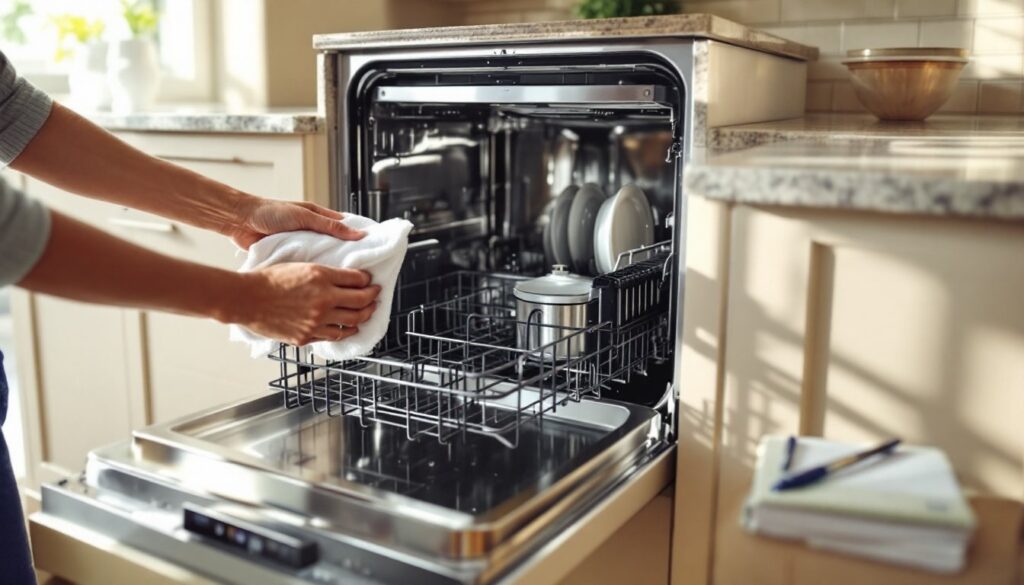
Use a damp microfiber cloth and a 1:1 solution of white vinegar and water to wipe the entire gasket, pulling back the folds to clean hidden areas. Pay attention to the bottom edge, where standing water tends to pool.
Inspect for cracks, tears, or sections that have pulled away from the door frame. A compromised gasket leaks water during the wash cycle, potentially damaging flooring or cabinetry. Gasket replacement is straightforward, peel off the old one and press the new gasket into the channel, but it’s a parts-and-labor job if you hire out. Most appliance service providers charge $150–$250 for the repair, including the part.
Dry the gasket thoroughly after cleaning to discourage mold growth between wash cycles.
Quarterly Deep Cleaning and Inspection
Every three months, run a full cleaning cycle to remove mineral deposits and grease buildup from interior surfaces and hidden components.
Materials needed:
- White vinegar (1 cup)
- Baking soda (1 cup)
- Dish soap (a few drops)
- Soft-bristle brush or old toothbrush
Process:
- Remove all racks and the filter assembly.
- Inspect the sump area (the well beneath the filter) for debris. Wipe it clean with a damp cloth.
- Place a dishwasher-safe bowl filled with 1 cup of white vinegar on the top rack.
- Run the hottest cycle available without detergent. The vinegar dissolves mineral deposits and cuts through grease.
- After the cycle completes, sprinkle 1 cup of baking soda across the bottom of the tub and run a short hot-water cycle. This neutralizes odors and provides a light abrasive clean.
While the tub is empty, inspect the door latch, hinges, and spray arm mounts for wear. Bosch door springs can weaken over time, causing the door to drop too fast or resist closing. If you notice this, the springs may need replacement, a job best left to a technician unless you’re comfortable working with tensioned components.
Check the heating element (visible at the bottom of some models) for heavy scale buildup. If deposits are thick, running a cycle with a commercial dishwasher descaler, such as those recommended in deep-cleaning guides, can restore efficiency. Follow the product’s instructions, as concentrations vary.
Finally, inspect the drain hose connection under the sink. It should loop up higher than the drain connection (a high loop or air gap prevents backflow). Make sure there are no kinks and that the hose is secured with a clamp.
Troubleshooting Common Bosch Dishwasher Issues
Dishes aren’t getting clean: Check the filter first, it’s clogged in 80% of cases. Also verify you’re using the correct detergent amount. Bosch recommends powder or gel designed for automatic dishwashers, not hand-washing soap. Too much detergent leaves a film: too little won’t cut grease.
If the spray arms aren’t spinning, remove them and clear the nozzles. Confirm nothing is blocking their rotation, tall items in the lower rack often interfere.
Cloudy glassware or white residue: This signals hard water issues. Switch to a rinse aid (Bosch machines have an adjustable rinse aid dispenser) and increase the dosage if cloudiness persists. For mineral buildup, run a vinegar cycle as described above. In regions with very hard water (above 10 gpg), consider installing a whole-house water softener.
Water pooling in the bottom: A small amount of standing water in the sump is normal. If it’s more than a cup or smells stagnant, check the drain hose for clogs or kinks. Remove the filter and inspect the drain pump cover (a small plastic cap in the sump area), twist it off and clear any debris.
Error codes: Bosch displays error codes on the control panel or via a series of blinking lights. Consult the owner’s manual for specifics. Common codes include E15 (water in the base pan, indicating a leak) and E24 (drain blockage). E15 usually requires tilting the machine to drain the base pan and identifying the leak source. If you’re not comfortable with this, call a pro.
Noisy operation: Bosch dishwashers are among the quietest on the market, typically 44–46 dBA. Unusual grinding or rattling often means something fell into the sump or a spray arm bearing is worn. A high-pitched whine can indicate a failing wash pump, this repair runs $200–$400 with labor.
Best Practices for Daily Use and Long-Term Care
Scrape, don’t rinse. Bosch dishwashers are designed to handle food residue. Pre-rinsing removes enzymes that detergent needs to activate, leading to poorer cleaning. Scrape off large chunks and load dishes directly.
Load strategically. Face dish surfaces toward the spray arms. Don’t nest bowls or let tall items block the upper spray arm. Overloading forces the pump to work harder and reduces cleaning effectiveness.
Run hot water at the sink first. Before starting a cycle, run the kitchen faucet until the water is hot. This ensures the dishwasher starts with hot water, improving detergent performance and cycle efficiency.
Use rinse aid. Even if your detergent claims to include rinse aid, Bosch’s system works better with a separate rinse aid in the built-in dispenser. It prevents spotting and helps dishes dry faster, especially with Bosch’s condensation-drying system, which doesn’t use a heating element in many models.
Don’t let it sit idle for weeks. If you’re away from home, run an empty cycle before leaving to flush the system. Stagnant water in the sump can develop odors and allow seals to dry out.
Check the water supply line annually. The braided steel hose connecting the dishwasher to your home’s water supply can develop pinhole leaks or loose fittings. Inspect it once a year and replace it every 5–7 years as preventive maintenance. Replacement hoses cost $10–$20.
Keep detergent and rinse aid fresh. Old detergent loses effectiveness. Store it in a cool, dry place and replace it if it’s been open for more than six months. Check rinse aid levels monthly and refill as needed, kitchen organization experts often recommend keeping a backup bottle on hand.
Know when to call a pro. Control board failures, pump replacements, and door latch repairs often require diagnostic tools and OEM parts. If the machine is under warranty or the repair estimate exceeds 50% of replacement cost, weigh your options carefully. Bosch dishwashers are repairable, but labor rates vary widely by region.