Table of Contents
ToggleA commercial roof isn’t just overhead, it’s a critical asset that shields equipment, inventory, employees, and customers from Kentucky’s weather extremes. In Lexington, where summer thunderstorms, winter freeze-thaw cycles, and UV exposure all take their toll, neglecting roof maintenance can turn a minor repair into a five-figure replacement. Whether you manage an office building, retail space, warehouse, or multi-tenant property, understanding what your roof needs, and when, keeps operations running and budgets intact. This guide walks through the maintenance essentials specific to Lexington’s climate, common failure points, scheduling best practices, and when to call in the pros.
Key Takeaways
- Commercial roof maintenance in Lexington, KY is critical due to climate extremes including summer UV damage, freeze-thaw cycles, and spring storms that can reduce roof lifespan from 20–30 years to just 12–15 years if neglected.
- Regular maintenance tasks—including debris removal, membrane inspection, flashing checks, and drain cleaning—prevent costly emergency repairs and protect against ponding water that accelerates membrane breakdown.
- Establish a documented maintenance schedule with bi-annual (spring and fall) inspections, monthly drain clearing, and post-storm assessments to maintain warranty compliance and reduce business interruption risks.
- Flashing failures and clogged drains are the most preventable commercial roofing problems; address them through semi-annual flashing inspections, routine sealant reapplication, and professional drain maintenance.
- Hire licensed, manufacturer-certified contractors for structural repairs, seam welding, and any work affecting warranty coverage, while reserving DIY maintenance for debris clearing and visual inspections only when proper fall protection is in place.
Why Regular Commercial Roof Maintenance Matters in Lexington
Lexington’s climate is a roofing stress test. Summer temperatures regularly hit the low 90s, baking flat roofing membranes and accelerating material degradation. Winter brings freezing rain, snow accumulation, and freeze-thaw cycles that exploit every crack or unsealed seam. Spring storms deliver high winds and hail that can puncture membranes or dislodge flashing.
Commercial roofs, typically low-slope or flat systems, don’t shed water as readily as residential steep slopes. Ponding water (standing water that remains 48 hours after rainfall) accelerates membrane breakdown, promotes leaks, and adds structural load. Left unchecked, a small leak can saturate insulation, compromise roof decking, damage ceiling systems, and even create mold hazards inside the building.
Regular maintenance extends roof lifespan significantly. A well-maintained TPO, EPDM, or modified bitumen roof can reach or exceed its rated 20- to 30-year life expectancy. Neglect that same roof, and you might face replacement after 12 to 15 years. Beyond longevity, proactive care prevents business interruption, emergency leaks mean downtime, lost inventory, and tenant complaints. Many commercial leases and insurance policies also require documented maintenance records: skipping inspections can void warranties or complicate claims.
Essential Commercial Roof Maintenance Tasks for Lexington Properties
A comprehensive maintenance program addresses both visible and hidden issues. Start with debris removal: leaves, branches, and sediment accumulate in drains, scuppers, and low spots, blocking water flow and causing ponding. Clear all drains and gutters monthly during fall, bi-monthly otherwise. Use a leaf blower or soft-bristle broom, never pressure wash membranes, as high pressure can damage coatings and seams.
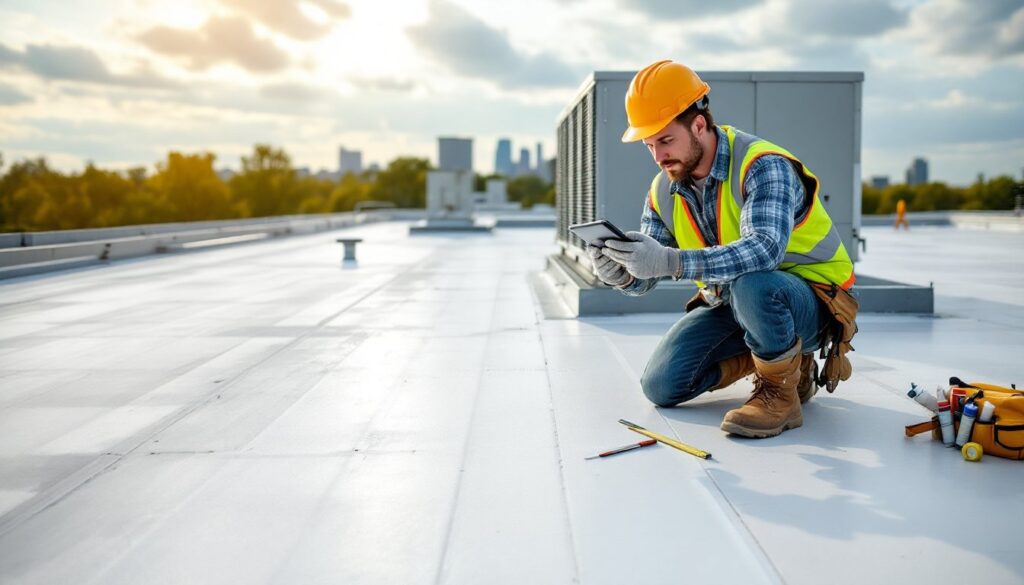
Inspect and clean membrane surfaces for punctures, blisters, cracking, or UV degradation. Look for splits at seams, especially on mechanically fastened systems where wind uplift stresses attachments. Check all penetrations, HVAC curbs, vent pipes, skylights, and exhaust fans, for cracked or missing sealant. Flashing around parapets, expansion joints, and roof edges should sit flat and firmly adhered: lifted or corroded metal flashing invites water intrusion.
Examine drainage components: roof drains, scuppers, downspouts, and overflow drains. Confirm all strainers are intact and drains flow freely. Ponding water indicates either inadequate slope (a design issue requiring professional attention) or clogged drainage (fixable with routine cleaning).
Walk the roof perimeter and check edge metal and copings. High winds can loosen fasteners or peel back edges, creating entry points for water and wind-driven rain. Tighten loose fasteners and reseal joints as needed.
Finally, document everything. Photograph problem areas, note repair dates, and keep a maintenance log. This record proves invaluable for warranty claims, insurance, and tracking recurring issues that signal bigger problems.
Seasonal Maintenance Considerations
Spring (March–May): After winter, inspect for ice damage, check seams and flashing for freeze-thaw cracks, clear any accumulated debris, and verify that drains weren’t clogged by ice or sediment. Spring storms in Lexington can be severe: post-storm inspections catch hail damage or wind-lifted membranes early.
Summer (June–August): UV exposure peaks. Check for membrane blistering, surface cracking, and coating degradation. This is the ideal season for applying reflective roof coatings, which reduce cooling loads and extend membrane life. Confirm HVAC units are draining condensate properly, pooled condensate accelerates localized membrane wear.
Fall (September–November): Clear leaves and organic debris before winter. Inspect and reseal any suspect seams or penetrations so they don’t fail during freeze-thaw cycles. Check edge metal and fasteners ahead of winter wind events.
Winter (December–February): Limit roof access during ice or snow, but after significant snowfall, monitor for excessive load (especially on older structures). Remove heavy snow accumulation if it exceeds design load, consult a structural engineer if unsure. Post-thaw, inspect for ice dam damage around drains and roof edges.
Common Commercial Roofing Problems in Lexington and How to Prevent Them
Ponding water tops the list. Even on “flat” roofs, design should provide at least 1/4-inch slope per foot toward drains. Ponding accelerates membrane aging, promotes algae growth, and eventually leads to leaks. Prevention: keep drains clear, ensure proper slope during installation, and address settled or sagging roof sections promptly.
Membrane shrinkage and splitting occur as roofing materials age and contract. Temperature swings in Lexington exacerbate this. EPDM and TPO membranes can pull away from termination bars or split at seams. Prevention: use quality materials rated for thermal cycling, ensure proper fastening and seam welding during installation, and apply compatible sealants at stress points.
Flashing failures cause more leaks than membrane damage. Metal flashing corrodes, sealants dry out and crack, and fasteners work loose under thermal expansion. Prevention: inspect flashing semi-annually, re-caulk with polyurethane or butyl-based sealants (avoid silicone on roofing membranes), and replace corroded metal before it fails.
Blistering and surface cracking result from trapped moisture, poor adhesion, or UV exposure. Blisters may not leak initially, but they compromise membrane integrity. Prevention: ensure proper substrate drying before membrane installation, use UV-resistant coatings, and address small blisters before they rupture.
Clogged or damaged drains turn minor rainstorms into rooftop lakes. Debris, bird nests, and sediment all block flow. Prevention: install drain strainers, inspect and clean drains monthly, and confirm overflow drains (required by code) function correctly.
Many of these problems share a root cause: deferred maintenance. Property managers seeking reliable contractor evaluations can access verified reviews and project cost data to benchmark local service providers.
Creating a Commercial Roof Maintenance Schedule
A documented schedule keeps maintenance from falling through the cracks. At minimum, inspect your roof twice annually, spring and fall, to catch seasonal damage and prepare for weather extremes. For buildings with heavy HVAC equipment, frequent foot traffic, or older roofing systems, quarterly inspections make sense.
After every severe weather event (hail, high winds, heavy snow), conduct a post-event walk-through within 48 hours. Photograph any new damage and document it for insurance claims if needed.
Monthly tasks include clearing debris from drains and gutters, especially during leaf-drop season. Assign this to in-house maintenance staff or include it in a service contract.
Annual deep-dive tasks: professional infrared scanning to detect trapped moisture, core sampling (if leaks are suspected but not visible), and a comprehensive report on remaining roof life. Many expert DIY and renovation resources recommend annual professional inspections for commercial properties to maintain warranty compliance and catch hidden issues.
Integrate roof maintenance into your property management software or calendar system. Set recurring reminders, assign responsibility, and require photo documentation. This creates accountability and a defensible record if warranty or insurance questions arise.
DIY vs. Professional Commercial Roof Maintenance: What You Need to Know
Some tasks suit in-house staff: others demand licensed professionals. DIY-friendly maintenance includes debris clearing, visual inspections from the roof edge or via drone, cleaning drain strainers, and applying spot sealant to small cracks (using products compatible with your membrane type).
But, walking on commercial roofs requires proper safety equipment: non-slip footwear, fall protection harnesses, and guardrails or warning lines if working near edges. OSHA fall protection rules apply to commercial properties: violations carry significant penalties. If your building exceeds two stories or your staff lacks fall-arrest training, hire professionals.
Professional-only tasks include seam welding or heat-welding TPO/PVC membranes, structural repairs to decking or insulation, applying spray polyurethane foam (SPF) or fluid-applied coatings, and any work affecting warranty coverage. Most commercial roofing warranties require professional installation and maintenance to remain valid.
Repairs involving structural concerns, sagging decking, ponding from inadequate slope, or damage to load-bearing members, require a licensed structural engineer and contractor. This isn’t a judgment call: building codes and liability both demand professional oversight.
For building owners managing multiple properties or lacking maintenance staff, a service contract with a local commercial roofing company often proves cost-effective. Contracts typically include scheduled inspections, priority emergency response, and discounted repair rates. Property managers researching advanced roofing and building techniques will find detailed guidance on identifying when professional intervention is necessary versus manageable in-house.
Safety note: Never walk a wet, icy, or aged roof without proper fall protection and a partner on-site. Commercial roofing accidents are serious, err on the side of caution.
Choosing the Right Commercial Roofing Contractor in Lexington
Not all roofing contractors handle commercial work, and not all commercial roofers are equal. Start by verifying licensure and insurance: Kentucky requires contractors to carry general liability and workers’ compensation insurance. Ask for certificates and confirm coverage limits match your project scope.
Look for contractors with manufacturer certifications in your roof system (GAF, Carlisle, Firestone, etc.). Certified contractors receive training, have access to extended warranties, and maintain quality standards to keep certification active. A 10- to 20-year workmanship warranty backed by both the contractor and manufacturer offers the best protection.
Request references from similar projects, office buildings, retail centers, warehouses, and follow up. Ask about responsiveness, budget adherence, and post-project support. Check online reviews, but weight recent, detailed reviews more heavily than star counts.
Get three written estimates detailing materials (brand, thickness, attachment method), scope of work, timeline, and warranty terms. The lowest bid often signals cut corners, cheap materials, inadequate fastening, or unlicensed labor. The highest bid isn’t always best either: compare value, not just price.
Ask about emergency response capabilities. Roof leaks don’t wait for business hours. Contractors offering 24/7 emergency service and maintaining repair materials in stock provide peace of mind.
Finally, confirm the contractor pulls permits when required. Lexington-Fayette Urban County Government requires permits for most commercial roofing work. A contractor who skips permits to save time or money leaves you liable for code violations and complicates future sales or refinancing.
A well-chosen contractor becomes a long-term partner in protecting your investment. Take the time to vet thoroughly, your roof will thank you for decades.