Table of Contents
ToggleJupiter’s subtropical climate is unforgiving. When temperatures routinely push into the 90s and humidity makes it feel ten degrees hotter, a reliable air conditioner isn’t a luxury, it’s a survival tool. But here’s the thing: AC units don’t coast indefinitely on autopilot. Neglect yours, and you’ll find out exactly how fast an $8,000 replacement can sneak up on you. Regular maintenance isn’t just about avoiding breakdowns during the worst heat waves. It’s about efficiency, air quality, and stretching every dollar you’ve invested in your HVAC system. This guide walks Jupiter homeowners through what matters, what you can handle yourself, and when it’s time to call in the pros.
Key Takeaways
- Regular AC maintenance in Jupiter can save $400 annually and extend your system’s lifespan from 7 to 10–15 years by preventing compressor damage and improving efficiency by 15–25%.
- Jupiter’s salt air, 74% humidity, and year-round cooling demand accelerate AC wear; coastal corrosion and algae in drain lines are major maintenance concerns unique to the region.
- DIY AC maintenance tasks like replacing filters every 30–60 days, clearing condenser debris monthly, and treating drain lines every two months prevent costly repairs and keep your system running efficiently.
- Professional AC maintenance in Jupiter should include annual refrigerant pressure checks, coil cleaning, capacitor testing, and blower motor lubrication ($150–$300 yearly for two visits).
- Common AC failures like frozen coils, clogged drains, short cycling, and musty odors are mostly preventable with consistent maintenance; ignoring warning signs can lead to $8,000+ replacement costs.
- Follow Jupiter’s seasonal AC maintenance schedule—pre-cooling tune-ups in February–March, monthly filter checks during peak summer cooling, and drain line inspections in shoulder seasons for optimal performance.
Why AC Maintenance Matters in Jupiter’s Climate
Jupiter sits squarely in USDA Hardiness Zone 10b, where cooling degree days outnumber heating days by a landslide. Air conditioners here run nearly year-round, accumulating thousands of operational hours that accelerate wear on compressors, coils, and blower motors.
Salt air from the Atlantic compounds the problem. Coastal corrosion eats away at condenser coils and electrical connections faster than inland units experience. A homeowner five miles from the beach might get twelve years from a condenser: beachfront properties sometimes see failure at eight.
Humidity is the silent saboteur. Jupiter averages 74% relative humidity year-round. When evaporator coils can’t shed moisture efficiently, condensate pans overflow, drain lines clog with algae, and mold colonies bloom inside ductwork. That musty smell when you fire up the AC? That’s biological growth you’re breathing.
Routine maintenance tackles these environmental stressors head-on. Clean coils transfer heat 15–25% more efficiently than dirty ones, translating directly to lower electric bills. A well-maintained 3-ton residential unit (standard for most Jupiter single-family homes) uses roughly 3,000 kWh less per year than a neglected counterpart, about $400 in savings at current FPL rates.
There’s also longevity. The average lifespan of a central AC in Florida is 10–15 years with consistent upkeep. Skip annual service, and you’re looking at replacement closer to the seven-year mark. That’s not anecdotal: HVAC failure analysis consistently links premature compressor burnout to refrigerant contamination and airflow restriction, both preventable with routine filter changes and coil cleaning.
Essential AC Maintenance Tasks Every Jupiter Homeowner Should Know
DIY Maintenance You Can Do Yourself
Most Jupiter homeowners can handle basic AC upkeep with tools already in the garage. Start here:
1. Replace air filters every 30–60 days. Jupiter’s pollen counts spike February through May and again in fall. Standard 1-inch pleated filters (MERV 8–11) trap most particulates without choking airflow. If you run a MERV 13 or higher, check monthly, tight weaves clog faster in humid climates. Turn off the system at the thermostat before swapping filters. Note the airflow direction arrow on the filter frame: install it backward and you’ll wreck filter efficiency.
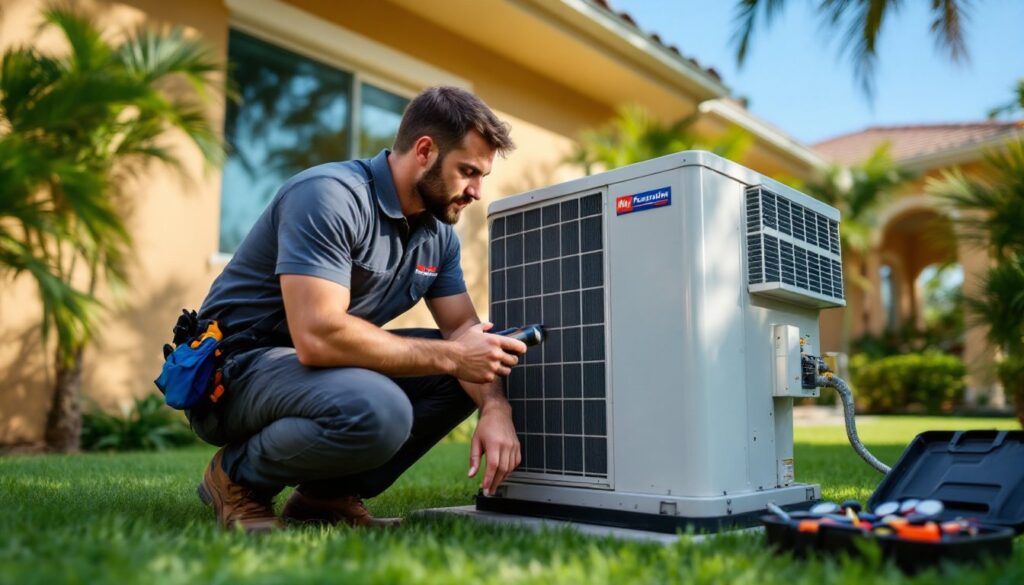
2. Clear debris from the outdoor condenser unit. Palm fronds, oak leaves, and landscaping clippings obstruct airflow through condenser fins. Once a month, shut off power at the disconnect box (that gray box mounted near the condenser), then hose down the unit from the inside out. Spray from inside the fin cage outward to push debris away, not deeper into the coils. Don’t use a pressure washer, anything over 500 PSI bends fragile aluminum fins.
3. Check the condensate drain line. Locate the PVC drain pipe running from your indoor air handler (usually in the attic or a closet). Pour a cup of distilled white vinegar or a condensate pan treatment tablet down the line every two months. This kills algae before it forms blockages. If water backs up into the drain pan, the float switch will kill your AC to prevent overflow damage.
4. Inspect insulation on refrigerant lines. The larger of the two copper lines running from condenser to air handler should be wrapped in black foam insulation. If it’s deteriorating or missing, moisture condenses on the cold pipe and drips, often mistaken for a refrigerant leak. Armaflex pipe insulation from any home center is a fifteen-minute fix.
5. Test the thermostat. Set your thermostat 5 degrees below room temperature and listen for the system to kick on within a minute. If it hesitates or cycles erratically, replace the batteries (if applicable) or check your circuit breaker. Older mercury-switch thermostats lose calibration: upgrading to a programmable or smart thermostat pays for itself in reduced runtime.
Safety note: Always kill power at the breaker and disconnect box before touching any AC components. Capacitors inside the condenser unit store lethal voltage even when the system is off.
When to Call a Professional in Jupiter
Some tasks require EPA-certified HVAC techs, specialized tools, or simply aren’t worth the liability:
Refrigerant issues. Federal law prohibits homeowners from purchasing or handling refrigerants like R-410A without certification. If your AC runs constantly but doesn’t cool, or ice builds up on the evaporator coil, you likely have a refrigerant leak or charge problem. A tech will pressure-test the system, repair leaks, and recharge to manufacturer specs, typically $250–$600 depending on leak location.
Annual coil cleaning and tune-ups. Professional service includes checking refrigerant pressures, measuring airflow across the evaporator, testing capacitor voltage, lubricating blower motors, and acid-washing coils. Many contractor matching services connect Jupiter homeowners with licensed HVAC pros who offer flat-rate maintenance agreements ($150–$300/year for two visits).
Electrical problems. Tripped breakers, burnt wiring, and failed contactors require a licensed electrician or HVAC tech. Florida’s aggressive thunderstorm season fries a lot of control boards and compressor contactors via power surges. If you smell burning plastic or see scorch marks near electrical connections, shut down the system immediately and call for service.
Ductwork inspection. Attic ducts in Jupiter homes often develop leaks at seams and boots, especially in older homes with flex duct installations. A blower door test and thermal imaging can pinpoint losses: sealing and insulating ductwork can recover 20–30% of lost cooling capacity. This is a job for a qualified HVAC contractor, not a weekend DIY project.
Permit requirements: Replacing an AC unit in Jupiter requires a Palm Beach County mechanical permit and inspections. Repair work generally doesn’t, but check with your municipality if you’re doing anything beyond filter swaps and coil cleaning.
Seasonal AC Maintenance Schedule for Jupiter Homes
Jupiter doesn’t have traditional seasons, but the AC workload shifts enough to justify a targeted schedule:
February–March (Pre-Cooling Season)
- Schedule professional tune-up before peak demand hits.
- Replace air filters.
- Clear winter debris from condenser (oak pollen, seed pods).
- Test thermostat programming for upcoming cooling load.
May–September (Peak Cooling)
- Check filters monthly: replace as needed.
- Monitor indoor humidity (should stay 40–60%). If it creeps higher, your evaporator may not be draining properly.
- Listen for unusual noises: grinding, squealing, or banging indicates worn bearings or loose components.
- Hose down condenser coils monthly during pollen surges.
October–November (Shoulder Season)
- Second professional visit if you run a bi-annual service plan.
- Inspect ductwork for visible gaps or disconnected boots (attic access required).
- Clean or replace filters before winter “cooling” season (yes, you’ll still run AC in January).
December–January (Light Use)
- Trim back landscaping that’s grown into condenser clearance (most codes require 24 inches of clearance on all sides).
- Check condensate drain line: treat with vinegar or tablets.
- Review utility bills for usage spikes that suggest efficiency loss.
This schedule aligns with home repair advice widely recommended for coastal subtropical climates. Consistency matters more than perfection, missing a month won’t wreck your system, but skipping an entire year will.
Common AC Problems Jupiter Homeowners Face
1. Frozen evaporator coils. Restricted airflow (dirty filter, closed vents, failed blower) or low refrigerant causes ice buildup on the indoor coil. Shut off the system and let it thaw completely, usually 4–6 hours, before restarting. If it refreezes, call a tech.
2. Clogged condensate drains. Algae loves warm, dark, wet environments. A blocked drain trips the float switch and shuts down your AC. Clear standing water from the pan, then flush the line with a wet/dry vac from the exterior termination point. Persistent clogs may require a drain line snake or professional service.
3. Short cycling. If your AC runs for 5–7 minutes then shuts off repeatedly, suspect a failing capacitor, oversized unit, or refrigerant overcharge. Short cycling hammers the compressor and spikes electric bills. This isn’t a DIY fix.
4. Weak airflow from vents. Check for closed dampers, blocked return grilles, or a filthy blower wheel. If all vents are open and the filter is clean, ductwork leaks or a dying blower motor are likely culprits. Attic duct inspections often reveal crushed or disconnected flex duct.
5. Musty odors. Mold in the ductwork or on the evaporator coil. Run the system on fan-only mode for 30 minutes after each cooling cycle to dry out the coil. If the smell persists, home service provider reviews can help you find duct cleaning specialists in Jupiter who’ll fog the system with antimicrobial treatment.
6. Tripped breakers. AC systems pull significant amperage, most residential units run on a 30–50 amp breaker. Frequent trips indicate a failing compressor, bad capacitor, or wiring issue. Never bypass a tripped breaker: it’s protecting your home from electrical fire.
Conclusion
AC maintenance in Jupiter isn’t optional, it’s infrastructure upkeep as essential as roof inspections and foundation drainage. The climate here demands more from cooling systems than almost anywhere else in the continental U.S., and the units that survive longest are the ones that get consistent, informed attention. Handle the basics yourself, schedule annual professional service, and don’t ignore warning signs. Your future self, sweating through a July compressor failure, will thank you.