Table of Contents
ToggleCommercial dishwashers handle thousands of dishes per week, but they only work reliably if they’re maintained properly. A neglected machine doesn’t just break down, it leaves restaurants scrambling for clean plates during dinner rush, drives up water and energy bills, and can even fail health inspections. Whether you’re running a small café or managing a large institutional kitchen, understanding basic maintenance keeps your dishwasher working efficiently and extends its lifespan. This guide breaks down the daily, weekly, and monthly tasks that prevent costly repairs and keep your operation running.
Key Takeaways
- Daily commercial dishwasher maintenance—including cleaning scrap screens, inspecting spray arms, and draining tanks—takes just 10–15 minutes but prevents 80% of costly breakdowns.
- Neglected machines use 20–30% more water and electricity, fail health code inspections, and risk closure if final rinse temperatures don’t reach 150–180°F.
- Weekly descaling with vinegar solutions and monthly commercial deliming prevent calcium buildup that reduces heating element efficiency and clogs spray nozzles.
- Installing a water softener ($800–$2,500) is essential if you’re descaling monthly and still seeing mineral deposits, protecting your dishwasher and improving cleaning performance.
- Schedule annual professional inspections to verify temperature compliance and safety interlocks; DIY repairs on electrical, pump, or control board components void warranties and create safety hazards.
- Most common dishwasher problems—dirty dishes, poor drainage, spotting—can be diagnosed by checking spray arm clogs, detergent levels, water temperature, and rinse aid before calling a technician.
Why Regular Maintenance Matters for Commercial Dishwashers
Commercial dishwashers are workhorses designed for heavy-duty cycles, but they’re also precision machines with heating elements, spray arms, pumps, and chemical dispensers that all need attention. Skip maintenance, and you’ll see the consequences fast.
Efficiency drops first. Clogged spray arms reduce water pressure, meaning dishes come out dirty or greasy. Scale buildup on heating elements forces the machine to work harder, increasing cycle times and energy consumption. A poorly maintained dishwasher can use 20–30% more water and electricity than one running clean.
Downtime costs real money. Most commercial dishwasher repairs require a technician visit, which often means a service call fee plus hourly labor. If a critical component like the pump motor fails during service hours, you’re looking at handwashing dishes or closing sections of your operation.
Health code violations are a serious risk. Health inspectors check dishwasher temperatures and sanitation performance. If your machine can’t reach 150–180°F during the final rinse (depending on your local health code), you’re liable for violations and potential closure.
Routine maintenance isn’t complicated or expensive. Most tasks take five to fifteen minutes and use common cleaning supplies. The return on that time investment is measured in years of reliable service.
Daily Maintenance Tasks Every Operator Should Follow
End-of-shift cleaning should be non-negotiable. These tasks take 10–15 minutes but prevent the majority of breakdowns.
Clean the scrap screen and remove debris. After the last load, pull the scrap screen or basket from the tank bottom. Dump food waste, then rinse thoroughly under hot water. Large debris like bones, toothpicks, or lemon wedges can damage pumps or clog drain lines.
Inspect and clean spray arms. Remove upper and lower spray arms (most twist or clip off). Check nozzles for clogs, lime deposits, grease, and food particles all reduce spray effectiveness. Use a toothpick or small wire to clear blocked holes. Rinse arms under running water before reinstalling.
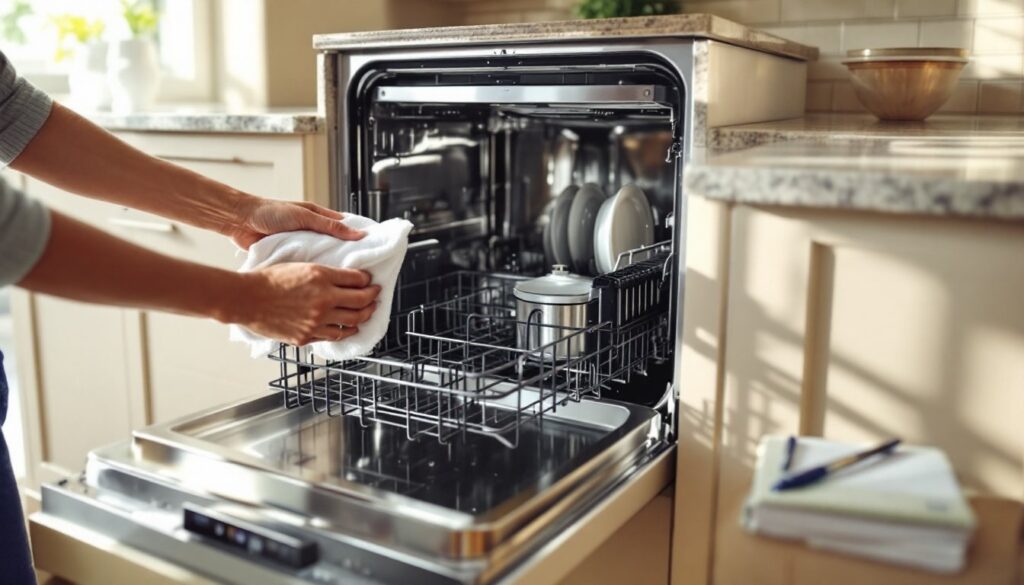
Wipe down door gaskets and surfaces. Door seals accumulate grease and food residue, which can harbor bacteria and cause leaks. Wipe gaskets with a damp cloth and mild detergent. Check for cracks or tears, damaged gaskets let steam and water escape, reducing wash temperature and wasting energy.
Drain and rinse the tank. At the end of the day, drain the wash tank completely. Rinse interior surfaces to remove grease and food particles. Leaving dirty water overnight encourages bacterial growth and creates foul odors.
Check detergent and rinse aid levels. Top off chemical dispensers as needed. Low detergent means poor cleaning: low rinse aid causes spotting and slow drying. Most machines have transparent reservoirs, making this a quick visual check.
Weekly and Monthly Cleaning Procedures
Beyond daily tasks, weekly and monthly deep cleaning keeps internal components running smoothly.
Weekly: Clean the wash and rinse arms thoroughly. Once a week, soak spray arms in a descaling solution or a mixture of hot water and white vinegar (50/50 ratio). This dissolves mineral buildup that daily rinsing can’t remove. Scrub the arms with a soft brush, clear all nozzles, and rinse before reinstalling.
Weekly: Inspect and clean filters. Most commercial dishwashers have multiple filters, a coarse screen, fine mesh filter, and sometimes a cylindrical filter in the sump. Remove all filters, rinse under hot water, and scrub with a nylon brush. Clogged filters reduce circulation and leave dishes dirty.
Weekly: Wipe down interior walls and door. Use a damp cloth and a mild alkaline cleaner to wipe the interior chamber, focusing on corners where grease and lime accumulate. Don’t forget the door interior and hinges.
Monthly: Delime the machine. Even with water softeners, calcium and lime deposits build up on heating elements, tank walls, and internal plumbing. Run an empty cycle with a commercial deliming solution (follow the manufacturer’s dosage instructions). This keeps heating elements efficient and prevents scale from clogging spray nozzles. Many kitchen maintenance routines include monthly descaling as a standard practice.
Monthly: Check the drain line and air gap. Pour hot water mixed with a degreaser down the drain line to prevent clogs. Inspect the air gap (if installed) for debris, which can cause backups and overflows.
Descaling and Deep Cleaning Your Commercial Dishwasher
Descaling goes beyond monthly deliming when you’re dealing with hard water or visible scale buildup. Thick lime deposits reduce heat transfer, slow cycle times, and can eventually damage heating elements.
Identify hard water problems. White or gray crusty deposits on heating elements, tank walls, or spray arms indicate hard water issues. Cloudy glassware and spotty dishes are also symptoms. Test your water hardness with an inexpensive test kit (measured in grains per gallon or ppm). Water above 7 grains per gallon typically requires a softener.
Use commercial descaling products. For heavy buildup, use a phosphoric acid-based descaler formulated for dishwashers (not household citric acid products, which are too weak). Drain the tank, remove spray arms and filters, then follow the product instructions, usually filling the tank with descaler solution and running a short cycle. Wear nitrile gloves and safety goggles: descalers are acidic and caustic.
Descale heating elements carefully. If scale has hardened onto elements, don’t chip or scrape, you’ll damage the element. Soak with descaler and use a soft brush. For severe cases, call a technician: damaged heating elements are expensive to replace.
Install a water softener if necessary. If you’re descaling monthly and still seeing buildup, your water is too hard for the machine to handle. A commercial water softener (salt-based or chemical dosing system) protects the dishwasher and improves cleaning performance. Professional installation typically costs $800–$2,500 depending on capacity and plumbing requirements.
Common Problems and How to Troubleshoot Them
Most commercial dishwasher issues have simple causes. Here’s how to diagnose and fix the most frequent problems.
Dishes come out dirty or greasy.
Check spray arms for clogs, verify detergent levels, and confirm water temperature. Wash water should be 150–160°F. If temperature is low, inspect the heating element and thermostat.
Water won’t drain.
Clogged drain lines are the usual culprit. Remove the scrap screen and check the drain valve for debris. Pour hot water down the drain to clear grease clogs. If water still won’t drain, the drain pump may be faulty.
Machine won’t fill.
Inspect the inlet water valve and supply line. Confirm water is turned on and pressure is adequate (most machines need 15–25 psi). A clogged inlet screen can also restrict flow, remove and clean it.
Dishes come out spotted or filmy.
This usually means low rinse aid, hard water, or incorrect rinse temperature. Refill rinse aid, check that final rinse reaches 180°F (or meets local code), and consider descaling.
Error codes or indicator lights.
Refer to the operator manual, error codes vary by manufacturer. Common codes indicate low water temperature, door switch failures, or pump issues. Many problems reset after powering the machine off for 60 seconds.
Loud or unusual noises.
Grinding or rattling often means debris in the pump impeller. Drain the tank, remove the pump cover (if accessible), and clear obstructions. Squealing can indicate worn bearings or a failing motor, that requires a technician.
When basic troubleshooting doesn’t resolve the issue, document symptoms and error codes before calling for service. This saves diagnostic time and cost.
When to Call a Professional Technician
Some maintenance is DIY-friendly. Other tasks require licensed technicians with specialized tools and knowledge of commercial codes.
Call a pro for electrical or plumbing repairs. If the heating element, pump motor, or control board fails, don’t attempt DIY repairs. Commercial dishwashers operate on 208V or 240V circuits and involve high-amperage electrical components. Incorrect repairs create fire hazards and void warranties. Licensed electricians or authorized service technicians should handle these.
Chemical pump failures need professional attention. Detergent and rinse aid dispensing systems involve peristaltic pumps and adjustable flow controls. If chemicals aren’t dispensing correctly even though full reservoirs, the pump or tubing likely needs replacement, a job for a trained tech.
Warranty and code considerations. Most commercial dishwashers carry 1–3 year parts and labor warranties. DIY repairs on covered components void that protection. Also, some jurisdictions require permitted work on commercial kitchen equipment that involves gas, electrical, or plumbing modifications.
Annual professional inspections are smart. Even with diligent daily maintenance, schedule a yearly service call. Techs inspect components you can’t easily access, pumps, motors, control boards, and safety interlocks. They also verify the machine meets local health code temperature and sanitation requirements. For businesses managing multiple appliances and systems, finding qualified technicians through vetted platforms simplifies scheduling and ensures proper credentials.
Expect to pay $100–$200 for a standard service call, plus parts and labor. That’s a fraction of the cost of replacing a dishwasher or losing business to downtime.
Conclusion
Commercial dishwasher maintenance isn’t glamorous, but it’s essential. Daily cleaning, weekly deep tasks, and monthly descaling keep machines running efficiently and prevent expensive breakdowns. Know when to troubleshoot and when to call a licensed tech. A well-maintained dishwasher pays for itself in lower utility bills, fewer repairs, and uninterrupted service.