Table of Contents
ToggleCincinnati’s climate throws a curveball at HVAC systems, humid summers that push air conditioners to the limit, followed by freezing winters that leave equipment dormant for months. That combination accelerates wear, clogs coils with pollen and dust, and leads to breakdowns right when homeowners need cool air most. Regular AC maintenance isn’t just about comfort: it’s about protecting a major investment and avoiding a $6,000 emergency replacement in July. Whether tackling basic upkeep or scheduling professional tune-ups, Cincinnati homeowners who stay proactive can extend equipment life by years, cut energy bills, and dodge those miserable nights waiting for repair crews.
Key Takeaways
- AC maintenance in Cincinnati is essential because humid summers and freezing winters accelerate system wear, and regular upkeep can extend equipment life by years while cutting energy bills by 10-15%.
- Replace air filters every 30-90 days and clear outdoor condenser coils of debris to maintain cooling capacity, prevent emergency breakdowns, and keep manufacturer warranties valid.
- Professional AC maintenance should be scheduled annually in spring before cooling season arrives, including refrigerant checks, electrical testing, and coil cleaning that homeowners cannot safely perform.
- Upgrade to a programmable smart thermostat and seal ductwork leaks to reduce cooling costs by 10-30% while supporting your AC maintenance efforts.
- Cincinnati homeowners should verify contractor licensing, read recent reviews, and expect to pay $100-$200 for standard tune-ups from established HVAC companies, avoiding low-ball “free inspection” offers.
- Follow a seasonal maintenance checklist—spring filter replacement and coil cleaning, summer vegetation trimming, fall leaf removal, and winter ice checks—to keep your system running efficiently year-round.
Why Regular AC Maintenance Matters for Cincinnati Homeowners
Cincinnati sits in a humid subtropical climate zone, which means air conditioners work overtime from May through September. High humidity forces systems to cycle more frequently, stressing the compressor and evaporator coils. Skipping annual maintenance reduces efficiency by 10-15% per year, according to the U.S. Department of Energy, and shortens the lifespan of a system that should last 15-20 years.
Dirty filters and clogged condenser coils are the top culprits. A neglected outdoor unit can lose half its cooling capacity when coils are blocked with cottonwood seeds, grass clippings, and Ohio Valley pollen. That forces the system to run longer, spiking electric bills and wearing out the compressor, the most expensive component to replace.
Beyond efficiency, maintenance catches small problems before they cascade. A refrigerant leak might start as a minor loss of cooling but can damage the compressor if the system runs low for months. A loose electrical connection can arc and fail, leaving homeowners sweating through a holiday weekend when repair rates triple. Routine inspections spot these issues when they’re cheap to fix.
Local building codes don’t mandate residential AC maintenance, but manufacturer warranties often require annual professional service to stay valid. Miss a tune-up, and that warranty claim for a failed compressor might get denied. For systems still under warranty, keeping service records is essential.
Essential AC Maintenance Tasks You Can Do Yourself
Homeowners can handle several maintenance tasks without professional help, saving $100-$200 annually on service calls. These jobs require basic tools and about an hour of work per season.
Filter Replacement and Cleaning
Disposable filters should be replaced every 30-90 days depending on use and household conditions. Homes with pets, smokers, or high dust levels need monthly changes. Standard 1-inch pleated filters cost $5-$15 each at hardware stores. Check the filter size printed on the frame, common sizes like 16x25x1 or 20x20x1 refer to nominal dimensions, which may be slightly larger than the actual filter.
Locate the filter at the return air grille (often in a hallway or basement) or inside the air handler cabinet. Turn off the system at the thermostat before removing the filter to avoid pulling debris into the blower. Hold the old filter up to a light source: if you can’t see through it, it’s clogged.
Washable electrostatic filters need monthly cleaning with a garden hose. Spray from the clean side to push dirt out the way it entered. Let the filter dry completely, usually 24 hours, before reinstalling. Running the system with a damp filter promotes mold growth in the ductwork.
Mark filter changes on a calendar or set a phone reminder. A clogged filter is the fastest way to freeze evaporator coils and trigger an emergency shutdown.
Outdoor Unit Care and Debris Removal
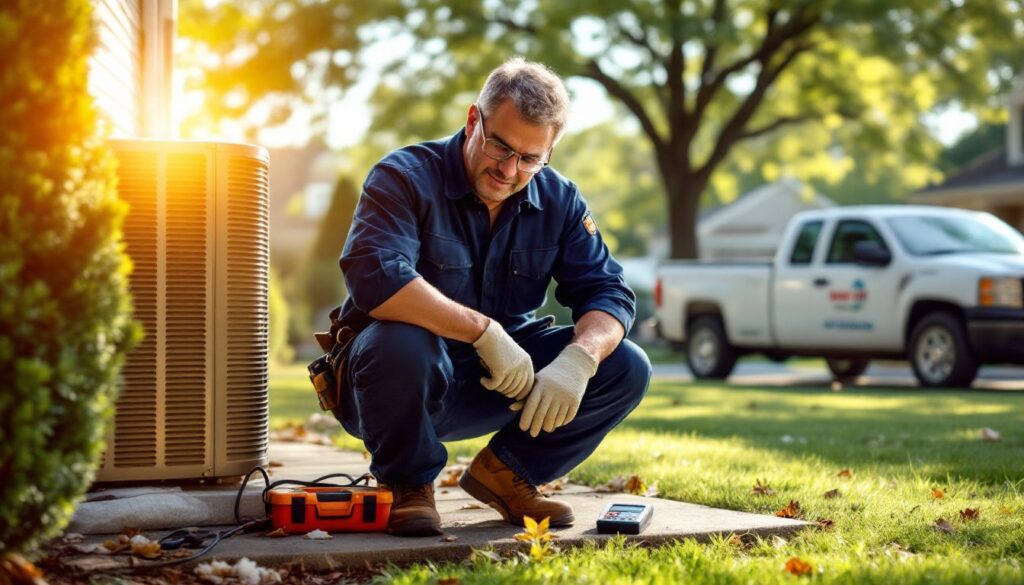
The condenser unit (the outdoor box with the fan) needs clear airflow on all sides. Maintain at least 2 feet of clearance around the unit. Trim back shrubs, remove stacked items, and clear fallen leaves that collect around the base.
Once per season, shut off power to the unit at the outdoor disconnect box, a gray metal box mounted near the condenser. Remove the top grille (usually 4-6 hex screws) and lift out any leaves or debris that fell into the fan compartment. Don’t force anything: if the fan blade is stuck, call a pro.
Spray the condenser coils (the vertical fins around the unit) with a garden hose from the inside out. Avoid pressure washers, which can bend the fragile aluminum fins. Straighten any bent fins with a fin comb, a $10 tool available at HVAC supply stores. Bent fins reduce airflow and cut efficiency.
Check the concrete pad under the unit. If it has settled or tilted, the unit may need releveling to prevent refrigerant line stress and compressor damage. A pad that’s sunk more than an inch warrants professional attention.
When to Call a Professional for AC Service in Cincinnati
DIY maintenance covers the basics, but certified HVAC techs handle tasks requiring specialized tools, refrigerant handling licenses, and electrical expertise. Plan on one professional tune-up annually, ideally in April before cooling season starts.
A standard service call includes:
- Refrigerant level check and leak testing. Only EPA-certified techs can legally handle refrigerant. Low refrigerant always means a leak, AC systems don’t consume refrigerant like a car consumes gas.
- Electrical component testing. Techs measure amp draw on the compressor and blower motor, check capacitor voltage, and tighten all electrical connections. Capacitors fail frequently in humid climates and cost $150-$300 to replace.
- Condensate drain cleaning. The evaporator coil drains moisture into a pan and PVC line. Algae and mold clog these drains, causing water damage to ceilings. Techs flush the line with a wet/dry vac and algae tablets.
- Evaporator and condenser coil deep cleaning. Interior coils require removing access panels and often chemical cleaners not available to consumers.
Call immediately if the system:
- Blows warm air even though a clean filter and clear outdoor unit
- Makes grinding, squealing, or banging noises
- Trips the circuit breaker repeatedly
- Leaks water inside the home
- Freezes up (ice on the indoor or outdoor coils)
Cincinnati has no shortage of HVAC contractors, but verify licensing and insurance before hiring. Ohio requires HVAC contractors to hold a state license for commercial work, though residential work has fewer restrictions. Reputable companies like those reviewed on Logan Services’ platform provide transparent pricing and certified technicians. Check references and read recent reviews, fly-by-night companies swarm Cincinnati each spring with low-ball estimates, then upsell unnecessary repairs.
Expect to pay $100-$200 for a standard tune-up from an established company. Avoid companies offering “free inspections”, they often diagnose expensive problems that don’t exist.
Seasonal AC Maintenance Checklist for Cincinnati’s Climate
Cincinnati’s temperature swings demand a seasonal approach. Here’s what to tackle and when:
Spring (March-April):
- Replace the air filter
- Clear winter debris from the outdoor unit
- Hose down condenser coils
- Check the thermostat batteries and test cooling mode
- Schedule professional tune-up before May heat arrives
- Inspect the condensate drain line for clogs
Summer (June-August):
- Check filter monthly during peak use
- Trim vegetation around the outdoor unit every 4-6 weeks
- Listen for unusual noises during operation
- Monitor energy bills for unexplained spikes
Fall (September-October):
- Replace filter before switching to heat mode
- Remove leaves and seeds from outdoor unit
- Cover the condenser unit if located under trees (remove cover monthly to prevent moisture buildup)
- Test emergency heat mode if equipped with a heat pump
Winter (November-February):
- Check outdoor unit after ice storms, ice buildup is normal on heat pumps in defrost mode, but snow drifts should be cleared
- Avoid stacking firewood or Christmas decorations against the outdoor unit
Cincinnati homeowners with heat pumps (systems that provide both heating and cooling) need defrost cycle checks in winter. Ice on the outdoor coils is normal during operation below 40°F, but if ice persists for hours or the system switches to backup heat constantly, call a tech.
Platforms like HomeAdvisor offer seasonal maintenance reminders and contractor matching if DIY tasks become overwhelming, though vetting contractors independently remains essential.
Cost-Saving Tips for AC Maintenance and Energy Efficiency
Maintenance pays for itself through lower utility bills and deferred replacement costs. Here’s how to maximize savings:
Upgrade the thermostat. A programmable or smart thermostat cuts cooling costs by 10-15% by automatically adjusting temperatures when homeowners are away. Models like the Ecobee and Honeywell Home connect to smartphones and learn usage patterns. Installation is straightforward for anyone comfortable with basic wiring, match the old thermostat’s wire labels (R, W, Y, G, C) to the new unit’s terminals. Shut off power at the breaker before touching any wires.
Seal ductwork leaks. Leaky ducts waste 20-30% of conditioned air. Inspect accessible ducts in the basement or attic for gaps at joints. Seal with mastic sealant (not standard duct tape, which degrades) or foil-backed tape rated for HVAC use. Insulate ducts in unconditioned spaces with R-6 or R-8 duct wrap.
Use ceiling fans correctly. Fans don’t cool air, they create a wind-chill effect on skin. Set fans to spin counterclockwise in summer and raise the thermostat by 4°F to maintain comfort while reducing AC runtime. Turn fans off in empty rooms.
Shade the outdoor unit. A condenser in full sun works harder than one in shade. Plant shrubs 2-3 feet away on the south and west sides, or install a louvered shade screen designed for HVAC units. Never build a full enclosure, airflow must remain unrestricted.
Sign up for utility rebates. Duke Energy and Cincinnati’s municipal utilities offer rebates for high-efficiency AC replacements and smart thermostat installations. Check current programs before upgrading equipment.
Join a maintenance plan. Many Cincinnati HVAC companies offer annual plans ($150-$300/year) that include spring and fall tune-ups, priority scheduling, and discounts on repairs. These plans often pay for themselves on the first emergency call. Resources like Today’s Homeowner provide comparisons of plan structures and what to expect.
Skip the gimmicks. Duct cleaning services flood Cincinnati mailboxes each spring, but the EPA recommends cleaning only if ducts show visible mold, vermin, or excessive dust. Most homes don’t need it. Similarly, refrigerant additives and “magic” coil cleaners sold at auto parts stores rarely deliver on promises and can void warranties.